
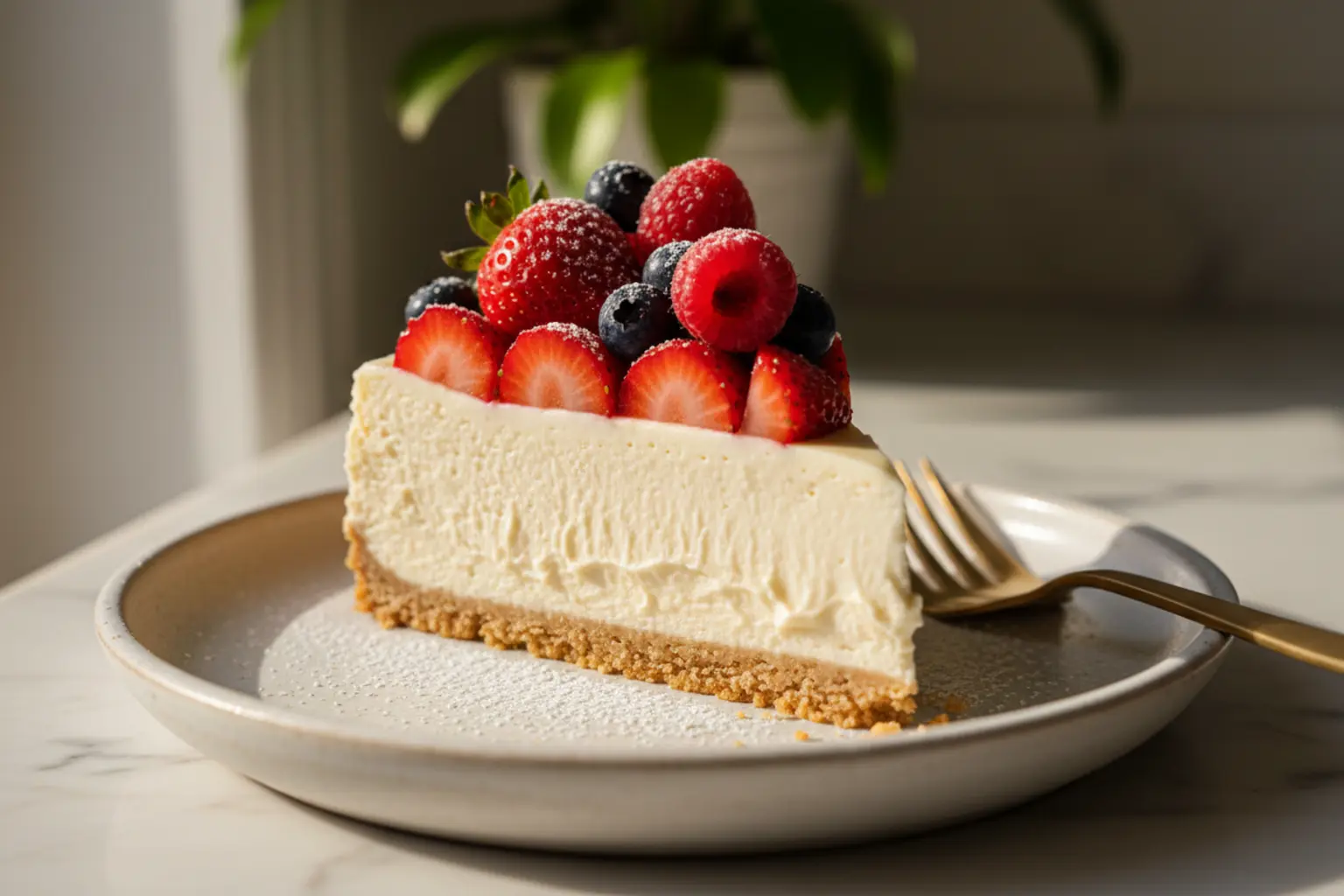
Vegan Ricotta Cheesecake
Looking for the ultimate Vegan Ricotta Cheesecake Recipe? This creamy, dairy-free dessert is rich, smooth, and incredibly easy to make. Perfect for any occasion!
Published: Apr 8, 2026 | By Ilyas Siaghy
I still remember the first time I tried to recreate my favorite cheesecake as a fully plant-based dessert. I wanted something just as rich, creamy, and satisfying, but completely dairy-free. After a few failed attempts and lots of experimenting in my kitchen, I finally perfected what I now call the best Vegan Ricotta Cheesecake. This recipe has quickly become one of my go-to desserts whenever I’m hosting friends or simply craving a slice of something indulgent yet wholesome.
What makes this Vegan Ricotta Cheesecake truly special is its incredibly smooth texture and delicate flavor, just like a classic cheesecake but made with simple, plant-based ingredients. The vegan ricotta creates that signature creamy consistency, while a perfectly balanced crust adds just the right amount of crunch. It’s surprisingly easy to make, even if you’re new to vegan baking.
Whether you’re fully vegan, lactose intolerant, or just looking for a healthier twist on a traditional dessert, this Vegan Ricotta Cheesecake is guaranteed to impress. It’s the kind of recipe that feels fancy but comes together with minimal effort. Trust me, once you try this creamy and easy Vegan Ricotta Cheesecake, you’ll want to make it again and again.
Tools You’ll Need
Why This Vegan Ricotta Cheesecake is So Special
Let’s be real, not all vegan cheesecakes are created equal. Some are too dense, some taste faintly of cashews, and others have a texture that’s closer to rubber than to the silky, creamy cheesecake we all dream about.
This vegan ricotta cheesecake recipe hits differently. Here’s why it’s special:
- Incredibly creamy texture, the combination of vegan ricotta and vegan cream cheese creates a filling that is smooth, rich, and luxuriously thick just like a traditional New York-style cheesecake.
- No water bath required, all you need is a 9-inch springform pan and a few mixing bowls, no special equipment and no fuss.
- Simple and accessible ingredients, everything you need is available at most well-stocked grocery stores or health food shops.
- Family-approved, kids and lifelong dairy lovers have all given this a thumbs up at my table.
- Make-ahead, this cheesecake actually tastes better the next day, making it a true weeknight winner for weekend entertaining.
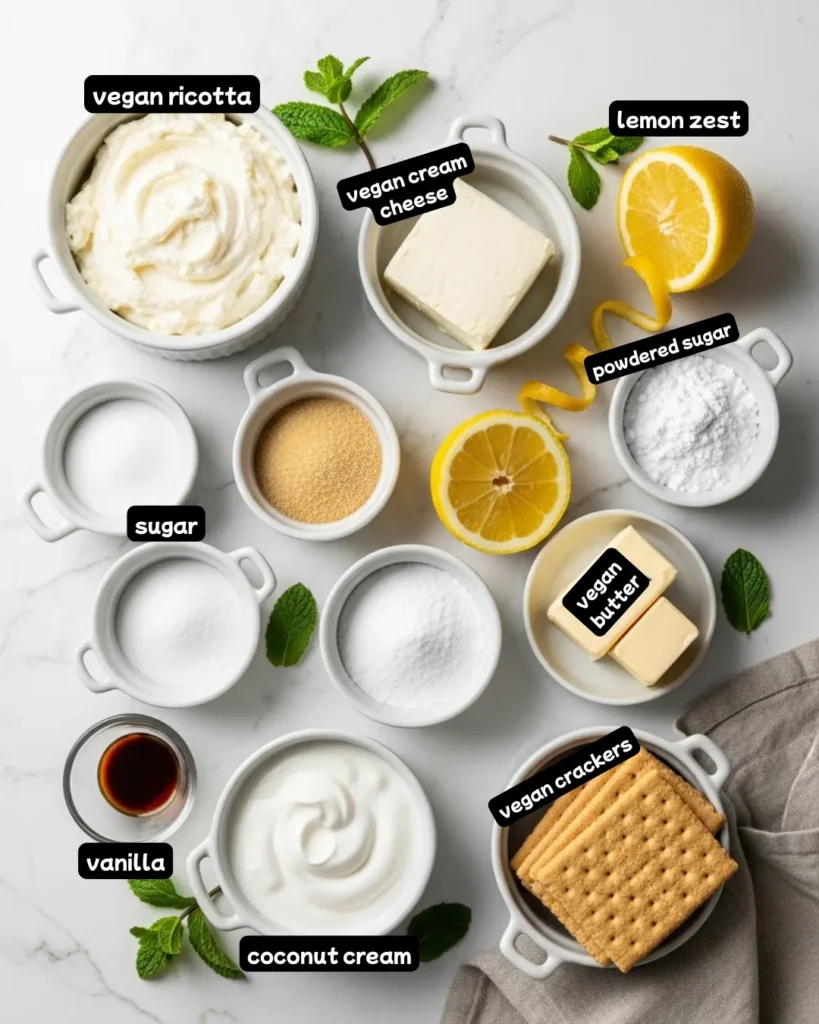
Ingredients for the Best Vegan Ricotta Cheesecake
For the Graham Cracker Crust
- 1 ¾ cups (175g) vegan graham cracker crumbs
- ¼ cup (50g) granulated sugar
- ½ teaspoon ground cinnamon
- 6 tablespoons (85g) vegan butter, melted
For the Cheesecake Filling
- 2 cups (480g) vegan ricotta cheese
- 16 oz (450g) vegan cream cheese
- ¾ cup (150g) granulated sugar
- ¼ cup (50g) powdered sugar
- ⅓ cup (80ml) full-fat canned coconut cream
- 3 tablespoons cornstarch
- 2 tablespoons fresh lemon juice
- 1 teaspoon pure vanilla extract
- ½ teaspoon lemon zest
- Pinch of salt
Optional Toppings
- Fresh strawberries, blueberries, or raspberries
- Vegan whipped cream
- Powdered sugar dusting
- Berry coulis or jam
How to Make Vegan Ricotta Cheesecake
Step 1: Prepare Your Pan and Preheat the Oven
- Preheat your oven to 325°F (163°C). It’s important not to rush this step, a properly preheated oven means even baking.
- Lightly grease a 9-inch springform pan with vegan butter or coconut oil. Make sure to get the sides too.
- Cut a circle of parchment paper to fit the bottom of the pan and press it in. This makes removing your cheesecake later much easier and stress-free, trust me on this one.
- Set the prepared pan aside while you make the crust.
Step 2: Make the Graham Cracker Crust
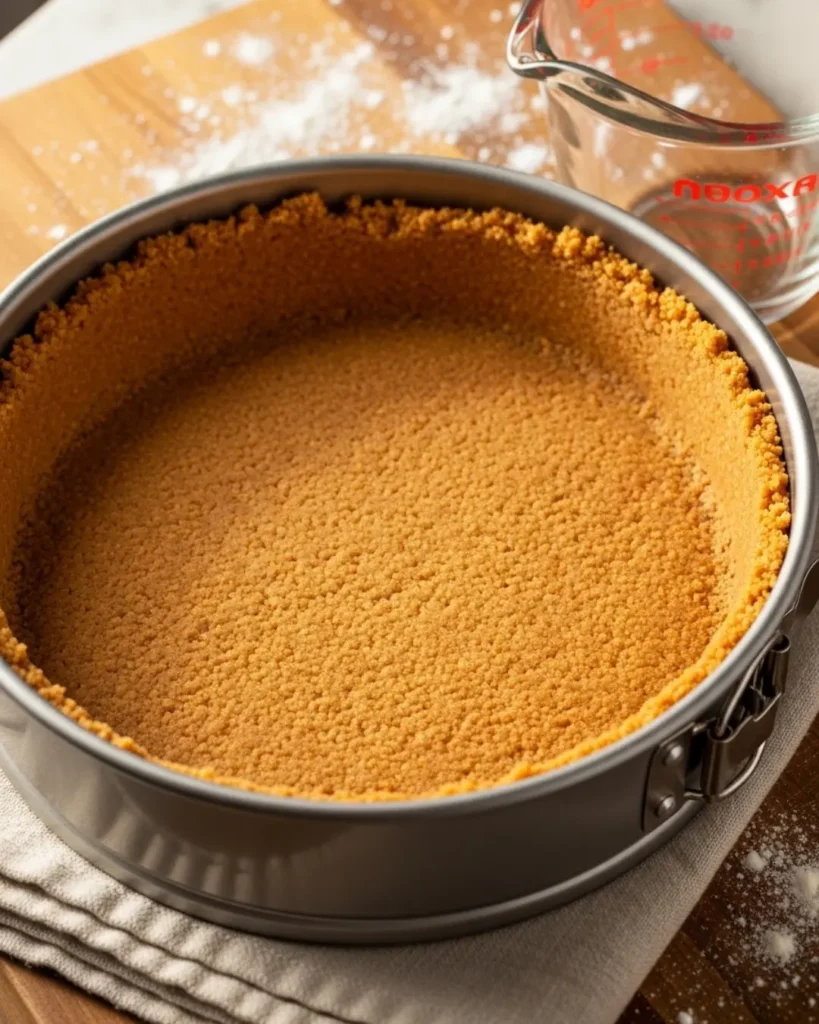
- If you’re starting with whole graham crackers, add them to a food processor and pulse until you get fine, even crumbs. Alternatively, place them in a zip-lock bag and crush with a rolling pin, a great stress reliever!
- In a medium mixing bowl, combine the graham cracker crumbs, sugar, and cinnamon. Stir until evenly mixed.
- Pour in the melted vegan butter and mix with a fork until the mixture resembles wet sand and holds together when you squeeze a small amount in your palm.
- Pour the crust mixture into your prepared springform pan and use the back of a measuring cup or a flat-bottomed glass to firmly press the crumbs into an even layer across the bottom and slightly up the sides.
- Bake the crust for 8–10 minutes, until it’s lightly golden and smells like toasted cookies.
- Remove from the oven and allow to cool slightly while you prepare the filling.
Step 3: Blend the Cheesecake Filling
- Make sure your vegan cream cheese is fully at room temperature before starting. Cold cream cheese won’t blend smoothly and can leave lumps in your filling, a common beginner mistake!
- Add the vegan ricotta and vegan cream cheese to a large mixing bowl or the bowl of a stand mixer. Beat together on medium speed for about 2 minutes with a hand mixer on medium speed, or use a stand mixer if you have one until smooth and well combined.
- Add the granulated sugar and powdered sugar, and continue to beat for another 1–2 minutes until the mixture is fluffy and light.
- Pour in the coconut cream, lemon juice, vanilla extract, and lemon zest. Mix on low speed until incorporated.
- Sprinkle in the cornstarch and pinch of salt. Mix on low speed for 1 minute until the batter is smooth, creamy, and completely lump-free.
- Taste the batter and adjust sweetness or lemon flavor as desired.
Beginner Tip: Don’t overmix once the cornstarch is added. Overworking the batter can incorporate too much air, which can cause cracks on the surface. Mix just until everything is combined.
Step 4: Bake the Cheesecake
- Pour the cheesecake filling over your pre-baked crust, using a rubber spatula to smooth the top into an even, flat layer.
- Gently tap the pan on the counter 3–4 times to release any air bubbles trapped in the batter.
- Place the pan on the middle rack of your oven and bake at 325°F (163°C) for 55–60 minutes.
- The cheesecake is done when the edges are set and lightly puffed, but the center still has a gentle jiggle when you nudge the pan. It will firm up as it cools. Do not overbake!
- Once done, turn off the oven but leave the cheesecake inside with the door slightly cracked open for 30 minutes. This gradual cooling helps prevent cracks.
Step 5: Cool and Chill
- After 30 minutes in the cooling oven, transfer the cheesecake to a wire rack and allow it to cool completely to room temperature, about 1 to 1.5 hours.
- Once cooled, cover the pan loosely with plastic wrap or foil and transfer it to the refrigerator.
- Chill for a minimum of 4 hours, but overnight is truly ideal. The texture becomes firmer, creamier, and more cohesive after a full night of chilling. This is why this recipe is such a make-ahead dream for entertaining!
Step 6: Serve and Top
- When ready to serve, run a thin knife or offset spatula around the inside edge of the springform pan before releasing the latch. This prevents any sticking.
- Carefully remove the outer ring of the springform pan and transfer the cheesecake to a serving plate or cake stand.
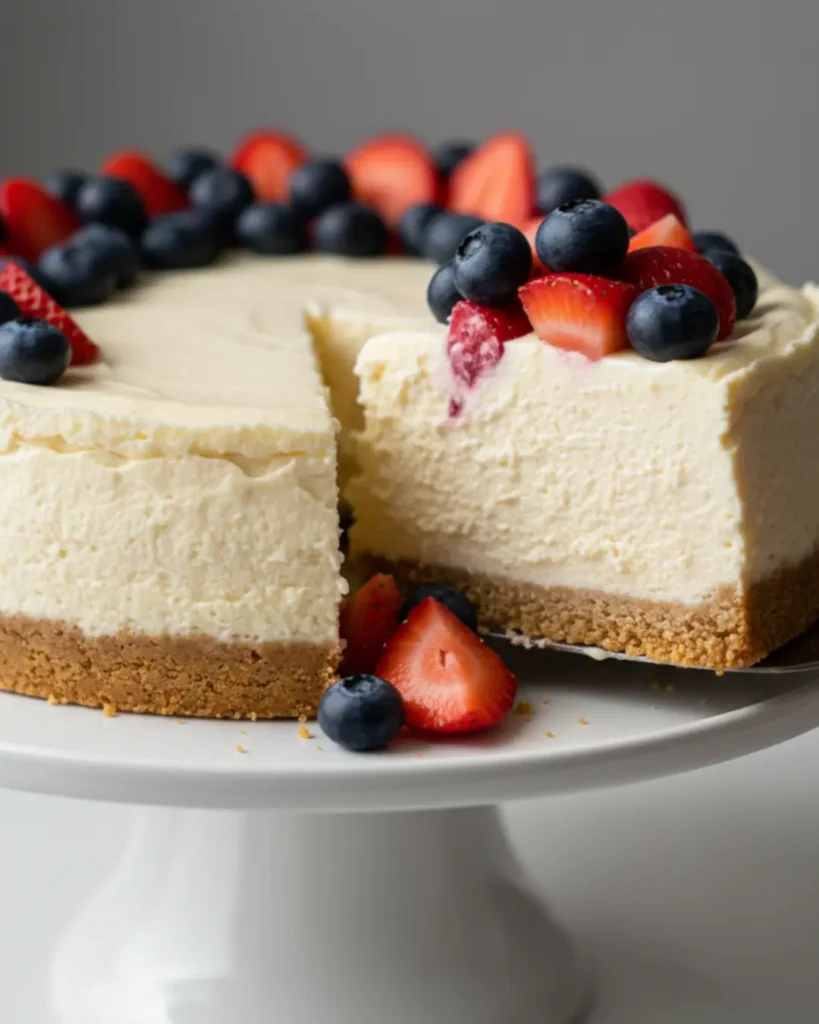
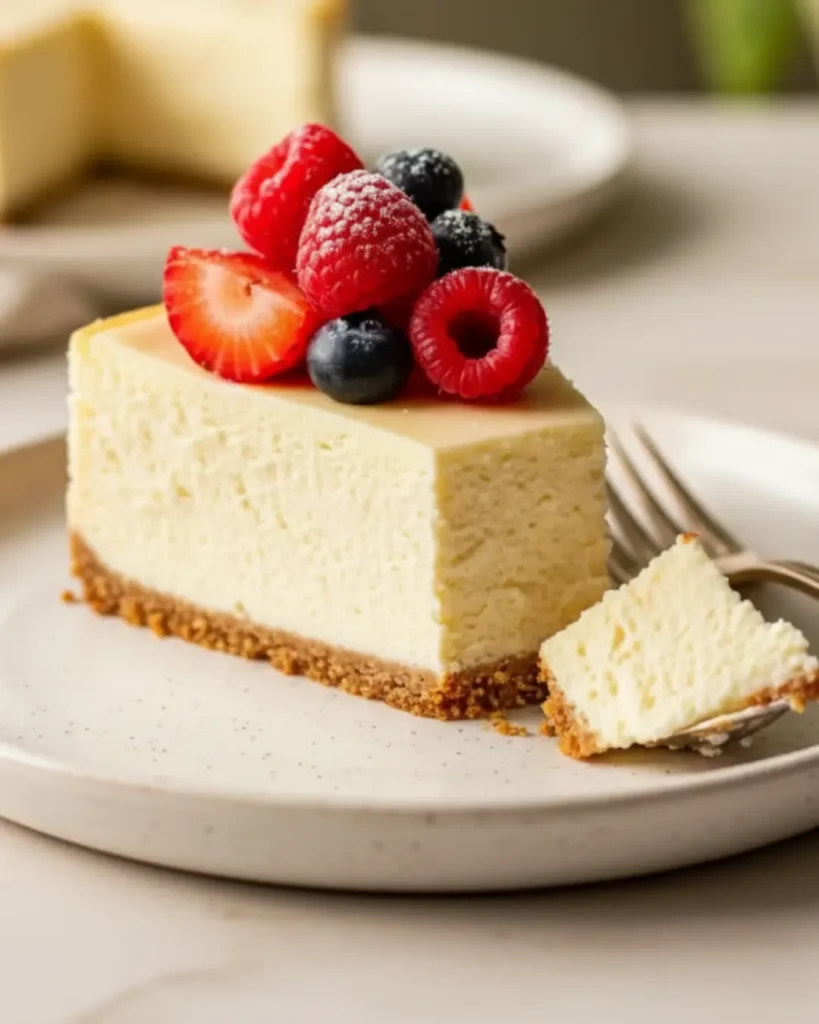
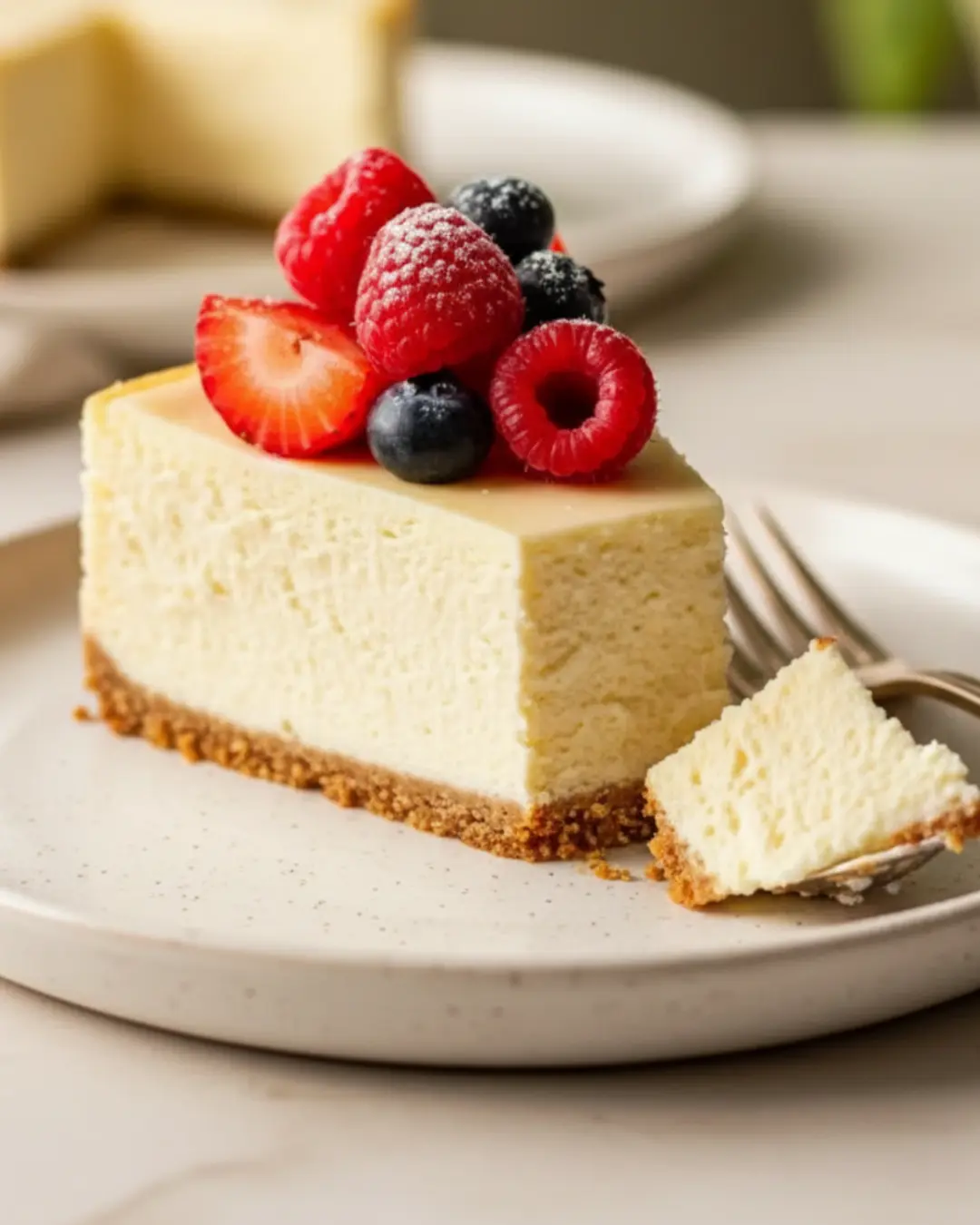
- Add your favorite toppings, a pile of fresh mixed berries is always a showstopper, but a simple dusting of powdered sugar is equally elegant.
- Slice with a sharp knife dipped in warm water and wiped clean between each cut for those perfect, Instagram-worthy slices.
Pro Tips, Substitutions & Variations
Pro Tips for the Perfect Vegan Ricotta Cheesecake
- Room temperature is everything. Cold dairy-free products don’t blend well. Set your cream cheese out at least an hour before baking.
- Don’t skip the cornstarch. It acts as a binding agent in place of eggs and is the secret to that firm-but-creamy texture.
- Full-fat coconut cream only. The canned, full-fat version gives richness. Coconut milk or lite versions will make the filling too thin.
- Make it the night before. This is genuinely one of those recipes that improves with time. Overnight chilling is the move.
Substitutions
- No vegan ricotta? Make your own! Blend 1 ½ cups of raw soaked cashews with ¼ cup water, 1 tablespoon lemon juice, and a pinch of salt until completely smooth.
- Gluten-free? Use certified gluten-free graham crackers or swap the crust for a blend of almond flour, coconut oil, and a little maple syrup.
- Coconut-free? Replace the coconut cream with full-fat oat milk creamer or a thick cashew cream.
- Lower sugar? Swap granulated sugar for coconut sugar or reduce by ¼ cup, the cheesecake will be slightly less sweet but still delicious.
Fun Flavor Variations
- Lemon Blueberry: Add 1 tablespoon of extra lemon zest to the batter and top with a homemade blueberry compote.
- Chocolate Marble: Swirl in 3 tablespoons of melted dark vegan chocolate before baking.
- Strawberry Swirl: Drop spoonfuls of strawberry jam onto the surface before baking and swirl with a toothpick.
- No-Bake Version: Skip the oven entirely
Storage & Make-Ahead Instructions
- Refrigerator: Store leftover vegan ricotta cheesecake tightly covered in the fridge for up to 5 days. The flavor and texture actually continue to develop over the first couple of days, if it lasts that long!
- Freezer: This cheesecake freezes beautifully! Slice it into individual portions, wrap each piece in plastic wrap, then place in a freezer-safe zip-lock bag or container. Freeze for up to 2 months.
- Thawing: Transfer frozen slices to the refrigerator and let them thaw overnight. Never microwave to thaw, it will ruin the texture.
- Make-Ahead Tip: You can bake this cheesecake up to 3 days in advance and keep it refrigerated. Add toppings just before serving for the freshest presentation.
Vegan Ricotta Cheesecake FAQs
Can I make vegan ricotta cheesecake without a springform pan?
You can use a regular 9-inch cake pan lined generously with parchment paper, leaving enough overhang on the sides to lift the cheesecake out. The result won’t be quite as picture-perfect, but it will taste just as amazing!
Why did my cheesecake crack on top?
Cracks usually happen for one of three reasons: overbaking, cooling too quickly, or overmixing the batter. Follow the gradual oven-cooling step (leaving the cheesecake in the turned-off oven with the door cracked), and you should be crack-free. And if cracks do appear? Pile on the berry topping and nobody will ever know. 😉
Is this the best vegan cheesecake for people who don’t like coconut flavor?
Great question! The coconut flavor is very subtle in the finished cheesecake, you really won’t taste it. But if you’re highly sensitive to it, swap the coconut cream for a thick oat-based creamer instead.
Can I use store-bought vegan ricotta, or do I need to make my own?
Store-bought works perfectly and keeps this recipe quick and easy. Kite Hill almond milk ricotta is widely available and has a fantastic neutral flavor that blends seamlessly into the cheesecake, find it here on Amazon or check your local Whole Foods refrigerated section.
Is this vegetarian cheesecake recipe nut-free?
It depends on your brand of vegan ricotta and cream cheese. Kite Hill products are almond-based. For a nut-free version, look for soy-based vegan cream cheese (like Violife) and make a ricotta from silken tofu blended with lemon juice and a pinch of salt.
How do I know when the cheesecake is done baking?
The edges should look set and slightly puffed, and the center should still wobble gently when you move the pan, similar to how a regular cheesecake behaves. If the entire surface looks solid and there’s no jiggle at all, it’s likely overbaked.
Can I make this vegan ricotta cheesecake recipe without baking?
Yes! For a no-bake version, omit the cornstarch and bake steps. Instead, blend all filling ingredients together, pour over a chilled crust, and refrigerate for at least 6–8 hours or overnight. The texture will be slightly softer but still wonderfully creamy.
For the best results, follow these 10 tips for baking perfect cheesecake every time, simple tricks that make a huge difference
More Easy International Dessert Recipes
- Mexican Fresas Con Crema
- Sopapilla Cheesecake Recipe
- 3-Ingredient Mango Sago Recipe
- Mexican Cinnamon Sugar Cookies
The Best Vegan Ricotta Cheesecake Recipe (Creamy & Easy!)
Ingredients
Method
- Preheat your oven to 325°F (163°C). A properly preheated oven ensures even baking throughout.
- Lightly grease a 9-inch springform pan with vegan butter or coconut oil, making sure to coat the sides thoroughly.
- Cut a circle of parchment paper to fit the bottom of the pan and press it in firmly. This makes removing the finished cheesecake much easier.
- Pulse whole vegan graham crackers in a food processor until you have fine, even crumbs. Alternatively, place them in a zip-lock bag and crush with a rolling pin.
- In a medium bowl, combine graham cracker crumbs, sugar, and cinnamon. Pour in the melted vegan butter and mix with a fork until the mixture resembles wet sand and holds together when pressed.
- Press the crust mixture firmly into the prepared pan using the back of a measuring cup, covering the bottom and slightly up the sides. Bake for 8–10 minutes until lightly golden. Remove and allow to cool slightly.
- Ensure your vegan cream cheese is fully at room temperature. Beat the vegan ricotta and vegan cream cheese together in a large bowl on medium speed for 2 minutes until smooth and well combined.
- Add the granulated sugar and powdered sugar to the cheese mixture and beat for another 1–2 minutes until fluffy and light.
- Pour in the coconut cream, lemon juice, vanilla extract, and lemon zest. Mix on low speed until fully incorporated.
- Sprinkle in the cornstarch and pinch of salt. Mix on low speed for 1 minute until the batter is completely smooth and lump-free. Do not overmix.
- Pour the cheesecake filling over the pre-baked crust. Use a rubber spatula to smooth the top into an even, flat layer. Tap the pan gently on the counter 3–4 times to release air bubbles.
- Place the pan on the middle rack of your preheated 325°F (163°C) oven. Bake for 55–60 minutes, until the edges are set and lightly puffed but the center still has a gentle jiggle when you nudge the pan.
- Turn off the oven and leave the cheesecake inside with the door slightly cracked open for 30 minutes. This gradual cooling step helps prevent cracks from forming on the surface.
- Transfer the cheesecake to a wire rack and allow it to cool completely to room temperature, about 1 to 1.5 hours.
- Cover loosely with plastic wrap or foil and refrigerate for a minimum of 4 hours, or ideally overnight for the best texture and flavor.
- Run a thin knife around the inside edge of the pan before releasing the springform latch. Top with fresh berries or powdered sugar. Slice with a sharp knife dipped in warm water, wiping clean between each cut for perfect slices.
One Comment