Thai Basil Pesto Recipe
Learn how to make Thai basil pesto recipe with fresh herbs, garlic, and nuts. A quick, vibrant sauce perfect for pasta, noodles, or dipping.
Published: Mar 18, 2026 | By Ilyas Siaghy
The first time I made a Thai basil pesto recipe, I was trying to use up a bunch of fresh Thai basil from the market, and it completely changed how I think about pesto. Instead of the classic version, this Thai-inspired twist turned out bold, fragrant, and packed with fresh, vibrant flavor. Now, it’s one of my favorite quick sauces for busy weeknights.
This Thai basil pesto recipe comes together in minutes using simple ingredients like garlic, nuts, and fresh herbs, creating a rich, herbaceous sauce with a slightly spicy kick. It’s incredibly versatile and perfect for pasta, noodles, sandwiches, or even as a dip. If you’re looking for an easy, flavorful way to upgrade your meals, this homemade Thai basil pesto is a must-try.
Why You’re Going to Love This Thai Basil Pesto Sauce
Unlike classic Italian pesto made with sweet basil, Thai basil pesto sauce brings a whole new personality to the table. Thai basil has a slightly spicy, anise-like flavor with hints of pepper and clove — it’s more assertive, more complex, and honestly, more interesting. When you blend it with garlic, citrus, and nuts, the result is a sauce that’s bright, punchy, and layered with flavor.
Here’s why this is a weeknight winner:
- Ready in 10 minutes flat: faster than waiting for pasta water to boil
- No cooking required: just blend and go
- Family-approved: even picky eaters love it stirred into noodles
- Incredibly versatile: pasta, rice, grilled chicken, spring rolls, sandwiches, you name it
- Naturally dairy-free and vegan: no parmesan needed here
What Is Thai Basil, Exactly?
If you’ve never cooked with Thai basil before, welcome, you’re in for a treat. Thai basil (Ocimum basilicum var. thyrsiflora) is a variety of basil native to Southeast Asia. It’s widely used in Thai, Vietnamese, and Indonesian cuisines.
How to identify it at the store:
- Sturdy, glossy green leaves (slightly smaller than Italian basil)
- Purple-tinged stems and sometimes purple flowers
- A distinct anise or licorice-like aroma when you crush a leaf
- Available at most Asian grocery stores, farmers markets, and increasingly at mainstream supermarkets
Can’t find Thai basil? No worries, scroll down to the substitutions section. But if you can get your hands on the real thing, please do. It makes all the difference.
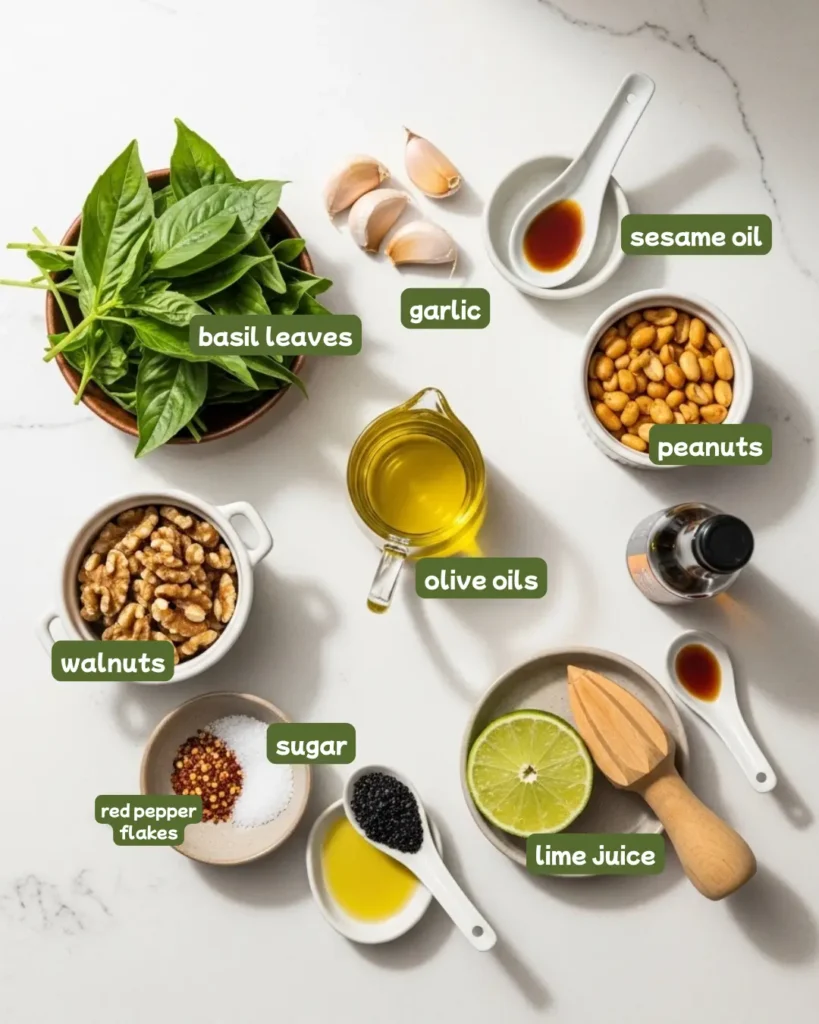
Ingredients for the Best Thai Basil Pesto Recipe
Main Ingredients
- 2 cups fresh Thai basil leaves, packed (about 2 large bunches)
- 3 cloves garlic, peeled
- ⅓ cup roasted peanuts
- ¼ cup walnuts
- ⅓ cup extra virgin olive oil
- 2 tablespoons fresh lime juice (about 1 large lime)
- 1 tablespoon fish sauce
- 1 teaspoon sesame oil
- ½ teaspoon red pepper flakes (adjust to taste)
- ½ teaspoon sugar or honey
- Salt, to taste
Optional Add-Ins
- 1 tablespoon fresh ginger, grated
- 1 green onion stalk
- 1 small Thai chili
- 2 tablespoons fresh cilantro
- 1 tablespoon white miso paste
Ingredient Tip: For the best flavor, use a combination of both peanuts and walnuts. The peanuts give you that classic Thai flavor profile, while the walnuts add a buttery richness that rounds everything out beautifully. Can’t decide? You don’t have to. Use both!
How to Make Thai Basil Pesto (Step by Step)
Prep Your Ingredients (Step 1)
- Rinse your Thai basil leaves under cold water and gently pat them completely dry with a clean kitchen towel or paper towels. Wet herbs will make your pesto watery, this step matters!
- Peel your garlic cloves. If you have a few minutes, let them sit out at room temperature, cold garlic can taste sharper and more bitter when raw.
- If using raw peanuts, lightly toast them in a dry skillet over medium heat for 3–4 minutes until golden and fragrant. Pre-roasted peanuts can go straight in.
- Measure out all your remaining ingredients and set them nearby, this recipe moves fast once you start blending.
Build the Flavor Base (Step 2)
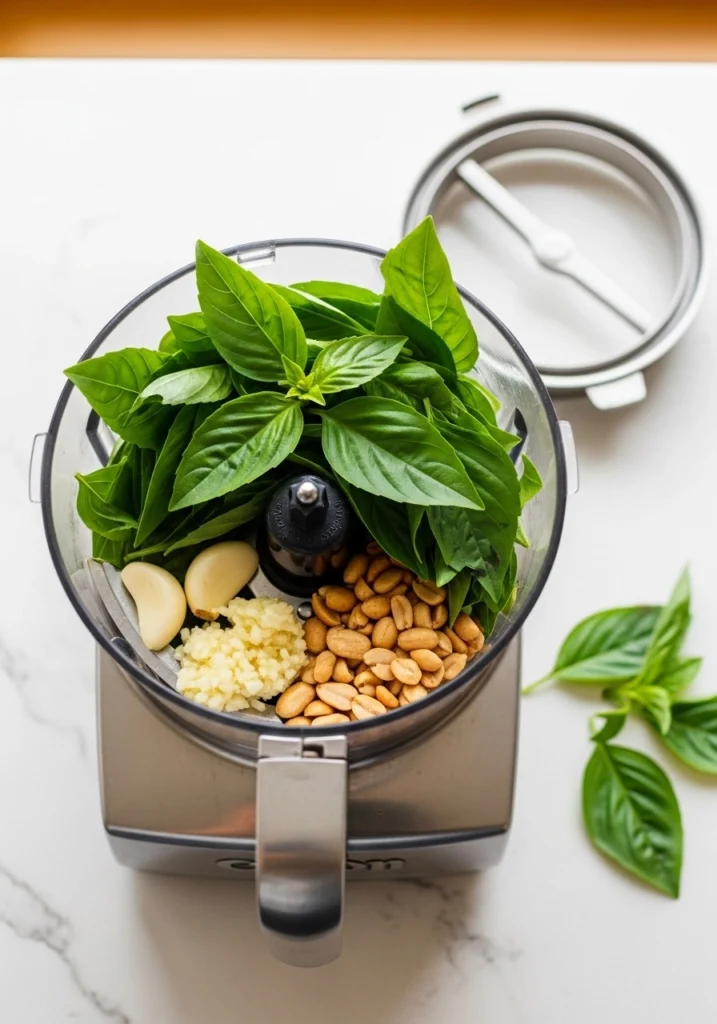
- Add the garlic cloves to your food processor or blender and pulse 4–5 times until roughly chopped. Starting with garlic alone ensures it gets evenly broken down and doesn’t leave any large raw chunks in your finished pesto.
- Add the peanuts and/or walnuts to the processor with the garlic.
- Pulse another 6–8 times until the mixture resembles coarse crumbs. You want texture here, not a paste, don’t over-process at this stage.
- Add the red pepper flakes, sugar (or honey), and sesame oil. Pulse once or twice to combine.
Add the Thai Basil (Step 3)
- Add half of your packed Thai basil leaves to the food processor.
- Pulse 5–6 times, then use a spatula to scrape down the sides of the bowl.
- Add the remaining Thai basil and pulse again until the leaves are well incorporated and the mixture is finely chopped but still has some body to it.
Beginner Tip: Don’t run the processor continuously at this stage, pulsing gives you control over the final texture and prevents the heat from the motor from wilting your herbs and turning the pesto brown.
Add the Liquids and Season (Step 4)
- With the processor running on low, slowly drizzle in the olive oil through the feed tube. This emulsification step helps create a smooth, cohesive sauce rather than a separated, oily one.
- Add the fresh lime juice and fish sauce (or miso paste for vegan).
- Process for 10–15 seconds until everything is combined to your desired consistency.
- Stop, taste, and adjust. Does it need more salt? More lime? More heat? This is your sauce, make it yours.
- If the pesto is too thick, add olive oil one tablespoon at a time until you reach your preferred consistency.
Taste, Adjust, and Serve (Step 5)
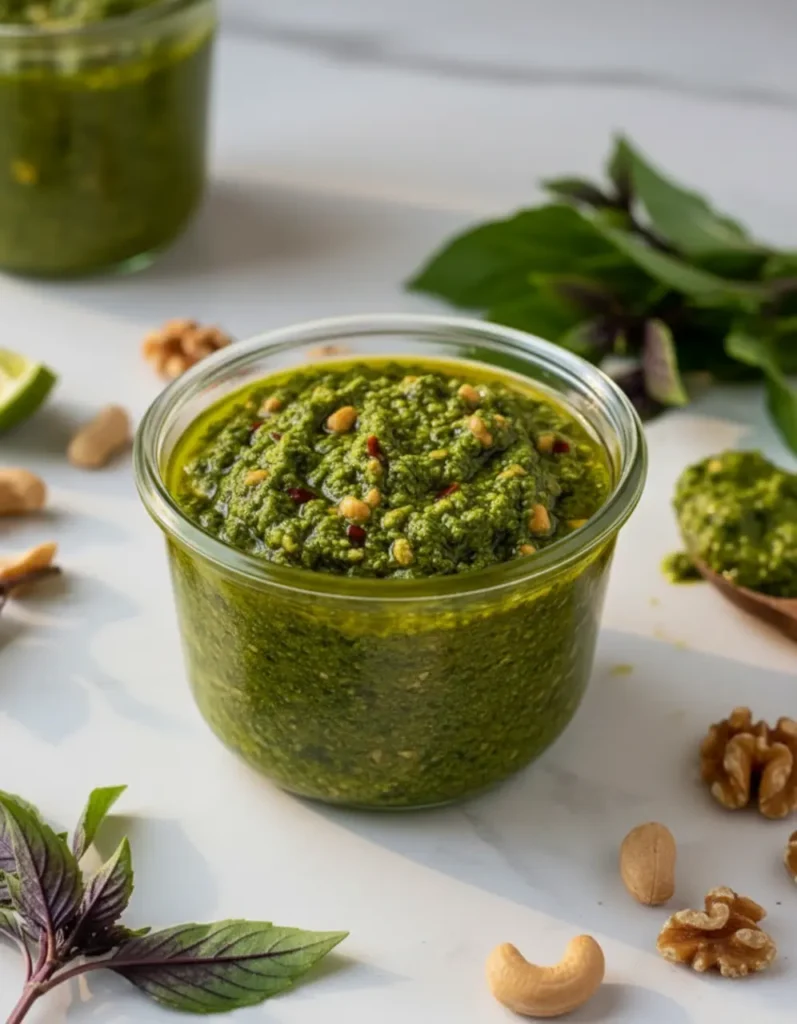
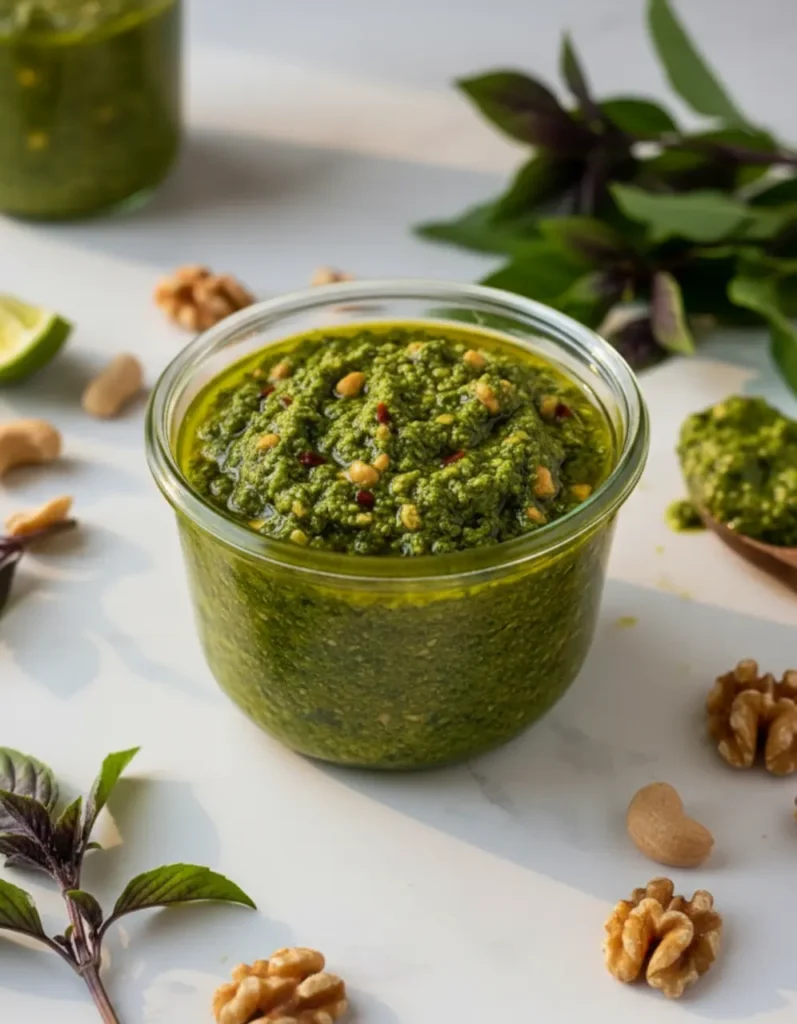
- Transfer your finished pesto to a clean bowl or jar.
- Taste one final time and make any last adjustments, a pinch more salt, a squeeze more lime, a drizzle more oil.
- Drizzle a thin layer of olive oil over the top of the pesto in the jar. This seals out air, keeps the color vibrant green, and extends freshness.
- Use immediately or store (see storage instructions below).
Thai Basil Pesto Pasta (Easy Weeknight Dinner)
The most popular way to use this sauce? Thai basil pesto pasta. Here’s the quick method:
- Cook your pasta of choice: spaghetti, linguine, or rice noodles all work beautifully according to package directions.
- Before draining, reserve ½ cup of pasta water. This starchy water is liquid gold for loosening and binding the sauce.
- Drain the pasta and immediately toss with 3–4 tablespoons of Thai basil pesto per serving.
- Add pasta water a splash at a time until the sauce coats every strand silkily.
- Top with crushed peanuts, extra Thai basil, a squeeze of lime, and chili flakes if you like heat.
Tips, Variations & Substitutions
Pro Tips for the Best Thai Basil Pesto
- Use the freshest basil you can find. Wilted or yellowing leaves will give you a dull, bitter pesto. Look for vibrant, perky leaves.
- Toast your nuts. Even 3–4 minutes in a dry pan transforms them, it deepens their flavor dramatically.
- Don’t skip the lime. Acid is essential. It brightens everything and balances the richness of the oil and nuts.
- Taste as you go. This recipe is highly adjustable. Trust your palate.
- Make it in batches. This pesto freezes beautifully, make double while you’re at it.
Variations to Try
- Thai Basil Pesto with Walnuts Only: Skip the peanuts entirely and use ½ cup walnuts. The result is creamier and milder, perfect if you’re serving kids or guests with peanut sensitivities.
- Thai Basil Pesto Recipe with Peanuts Only: Use ½ cup roasted peanuts for the most authentic, nutty, Thai-inspired flavor.
- Spicy Version: Add 1–2 Thai bird chilies or increase red pepper flakes to 1 teaspoon.
- Creamy Version: Blend in 2 tablespoons of full-fat coconut cream for a luscious, coconut-forward sauce.
- Herb Blend: Swap out ¼ cup of the Thai basil for fresh cilantro or mint for a more complex, multi-herb profile.
- Cashew Version: Swap all nuts for raw cashews for a buttery, delicate pesto.
Dietary Modifications
- Vegan/Vegetarian: Simply omit the fish sauce and use white miso paste or a splash of soy sauce instead.
- Nut-Free: Replace all nuts with toasted pumpkin seeds (pepitas) — still creamy, still delicious, totally allergy-friendly.
- Lower Oil: Reduce olive oil to ¼ cup and add 2 tablespoons of water to adjust consistency.
Storage & Reheating Instructions
Refrigerator Storage
Store your Thai basil pesto in an airtight glass jar or container in the refrigerator for up to 5 days. Always smooth the top surface and cover with a thin layer of olive oil before sealing this prevents oxidation and keeps the color beautifully green.
Freezer Storage
This pesto freezes exceptionally well for up to 3 months. Two easy methods:
- Ice cube tray method: Spoon pesto into an ice cube tray, freeze until solid, then transfer cubes to a zip-lock freezer bag. Each cube is roughly 1 tablespoon , perfect for pulling out exactly what you need.
- Jar method: Freeze in a small glass jar, leaving 1 inch of headspace for expansion.
How to Use from Frozen
Simply pull a few cubes from the freezer the night before and let them thaw in the fridge overnight. Or add a frozen cube directly to hot pasta, it melts in beautifully within seconds.
Do not microwave pesto. The heat destroys the fresh herb flavor and turns it dull. Always thaw gently or toss directly with hot food.
Where to Use Thai Basil Pesto
Thai Basil Pesto Recipe FAQs
1. Can I use regular basil instead of Thai basil?
Yes, you absolutely can, but the flavor will be different. Regular sweet basil will give you a milder, more classic pesto taste. Thai basil brings that distinct anise-spice note that makes this recipe unique. If you can find it, use it. But regular basil makes a delicious substitute in a pinch.
2. What’s the difference between Thai basil pesto and Italian pesto?
Traditional Italian pesto uses sweet basil, pine nuts, parmesan cheese, garlic, and olive oil. This Thai basil pesto sauce skips the cheese, swaps pine nuts for peanuts or walnuts, and adds lime juice, sesame oil, and fish sauce for a Southeast Asian flavor profile. It’s bolder, brighter, and has more complex layers of flavor.
3. Is this Thai basil pesto recipe gluten-free?
Yes! All the base ingredients are naturally gluten-free. Just double-check your fish sauce label if using most are GF, but a few brands add wheat. Tamari or coconut aminos are great gluten-free alternatives.
4. Can I make this without a food processor?
Absolutely. A high-powered blender works just as well. If you don’t have either, you can make a rustic version using a sharp knife, finely chop everything by hand and whisk together with the oil. It’ll be chunkier but equally delicious, and honestly very satisfying to make.
5. What can I serve with Thai basil pesto besides pasta?
So many things! Try it as a dipping sauce for spring rolls, a spread on grilled chicken sandwiches, a topping for grilled salmon, a stir-in for fried rice or grain bowls, a drizzle over roasted vegetables, or a sauce for homemade pizza. It’s endlessly versatile.
6. My pesto turned brown. What went wrong?
Browning (oxidation) usually happens when the pesto is exposed to air. To prevent it: always cover the surface with a thin layer of olive oil, store in an airtight container, and use within the recommended timeframe. Blanching the basil for 15 seconds before blending also helps preserve the green color, though it slightly mutes the fresh flavor.
7. Can kids eat this Thai Basil Pesto recipe?
Yes, with a small adjustment! Simply omit the red pepper flakes and reduce or skip the fish sauce for a milder, kid-friendly version. Tossed through pasta with a sprinkle of parmesan, it tends to be a huge hit with little ones who love green noodles.
More Flavorful Thai Food Recipes
Thai Basil Pesto Recipe (Fresh & Flavorful)
Ingredients
Equipment
Method
- Rinse your Thai basil leaves under cold water and gently pat them completely dry with a clean kitchen towel or paper towels. Wet herbs will make your pesto watery.
- Peel your garlic cloves and let them sit at room temperature for a few minutes before blending to mellow their raw sharpness.
- If using raw peanuts, lightly toast them in a dry skillet over medium heat for 3 to 4 minutes until golden and fragrant. Pre-roasted peanuts can go straight into the blender.
- Add the garlic cloves to your food processor or blender and pulse 4 to 5 times until roughly chopped.
- Add the peanuts and walnuts to the processor with the garlic and pulse 6 to 8 times until the mixture resembles coarse crumbs. Do not over-process.
- Add the red pepper flakes, sugar or honey, and sesame oil. Pulse once or twice to combine.
- Add half of your packed Thai basil leaves to the food processor. Pulse 5 to 6 times, then use a spatula to scrape down the sides. Add the remaining Thai basil and pulse again until the leaves are finely chopped but still have texture.
- With the processor running on low, slowly drizzle in the olive oil through the feed tube to emulsify the sauce into a smooth, cohesive consistency.
- Add the fresh lime juice and fish sauce (or miso paste for a vegan version). Process for 10 to 15 seconds until fully combined.
- Taste the pesto and adjust with more salt, lime juice, or red pepper flakes as needed. If too thick, add olive oil one tablespoon at a time until you reach your desired consistency.
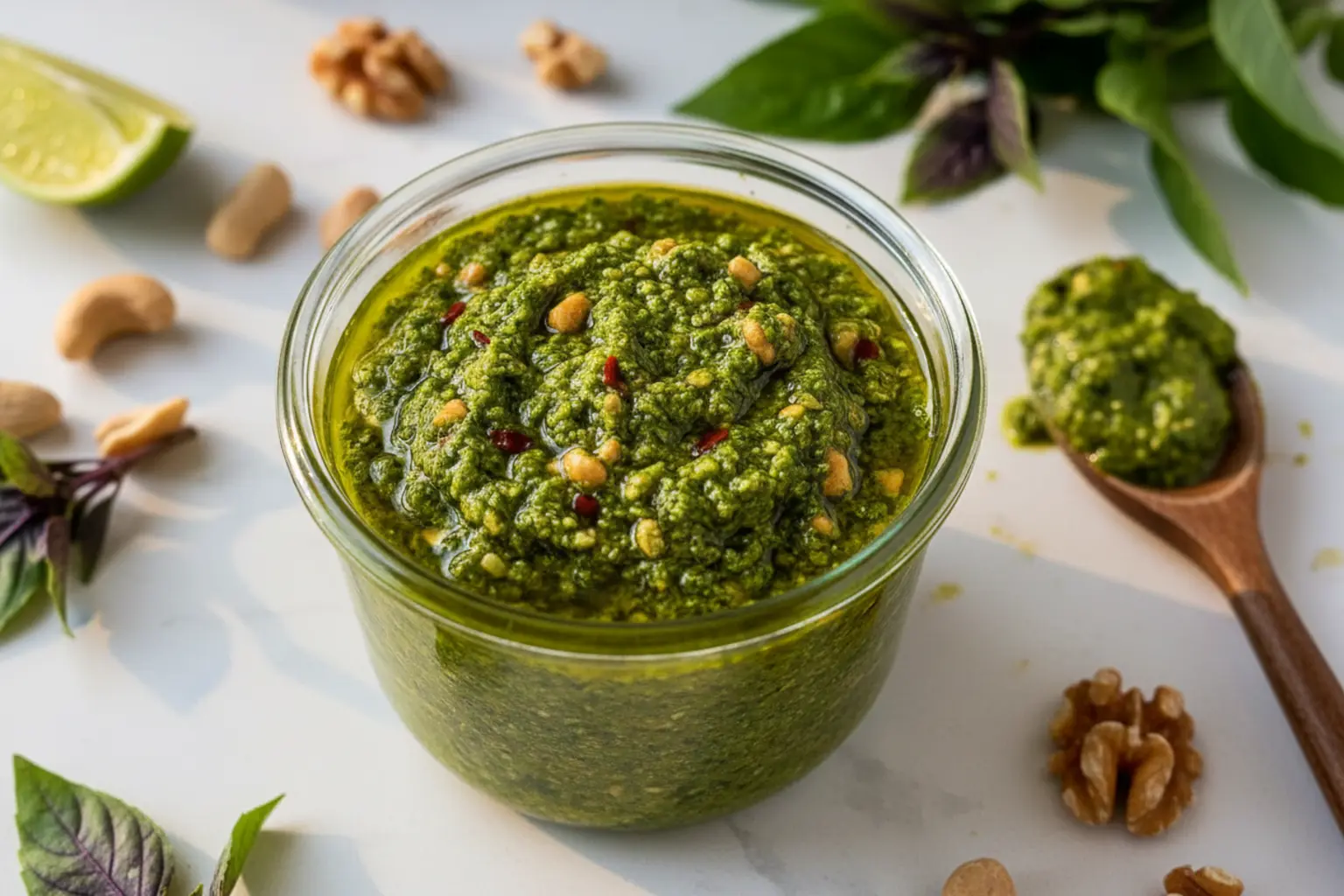
- Transfer your finished pesto to a clean bowl or glass jar. Drizzle a thin layer of olive oil over the top to seal out air and keep the color vibrant green.
- Use immediately tossed through pasta, noodles, or as a dipping sauce. Store in an airtight container in the refrigerator for up to 5 days or freeze for up to 3 months.