Cold Soba Noodles
Learn how to make authentic cold soba noodles (zaru soba) with a rich dipping sauce in just 15 minutes, the ultimate refreshing summer lunch recipe.
Published: July 14, 2026 | By Ilyas Siaghy
Introduction
The first time I made cold soba noodles at home, I honestly wasn’t expecting much. I had a pack of soba noodles in the pantry and one of those hot afternoons when the last thing I wanted was to stand over a stove making a complicated meal. I cooked the noodles, rinsed them under cold water, mixed up a quick dipping sauce, and suddenly lunch was ready.
Since then, this Cold Soba Noodles recipe has become one of those meals I turn to whenever I want something light, refreshing, and filling without spending much time in the kitchen. There’s something so satisfying about eating chilled buckwheat noodles straight from the fridge, especially when they’re dipped into a savory homemade tsuyu sauce. I usually keep the toppings simple with sliced green onions, shredded nori, and a little wasabi on the side.
What I also love about making Cold Soba Noodles is how little preparation they need. The noodles cook in just a few minutes, and while they’re boiling, I can quickly prepare the dipping sauce and toppings. It’s the kind of recipe that makes a busy lunch or easy dinner feel completely effortless, and it’s one I find myself coming back to whenever I’m craving something cool and simple.
Why This Cold Soba Recipe Works
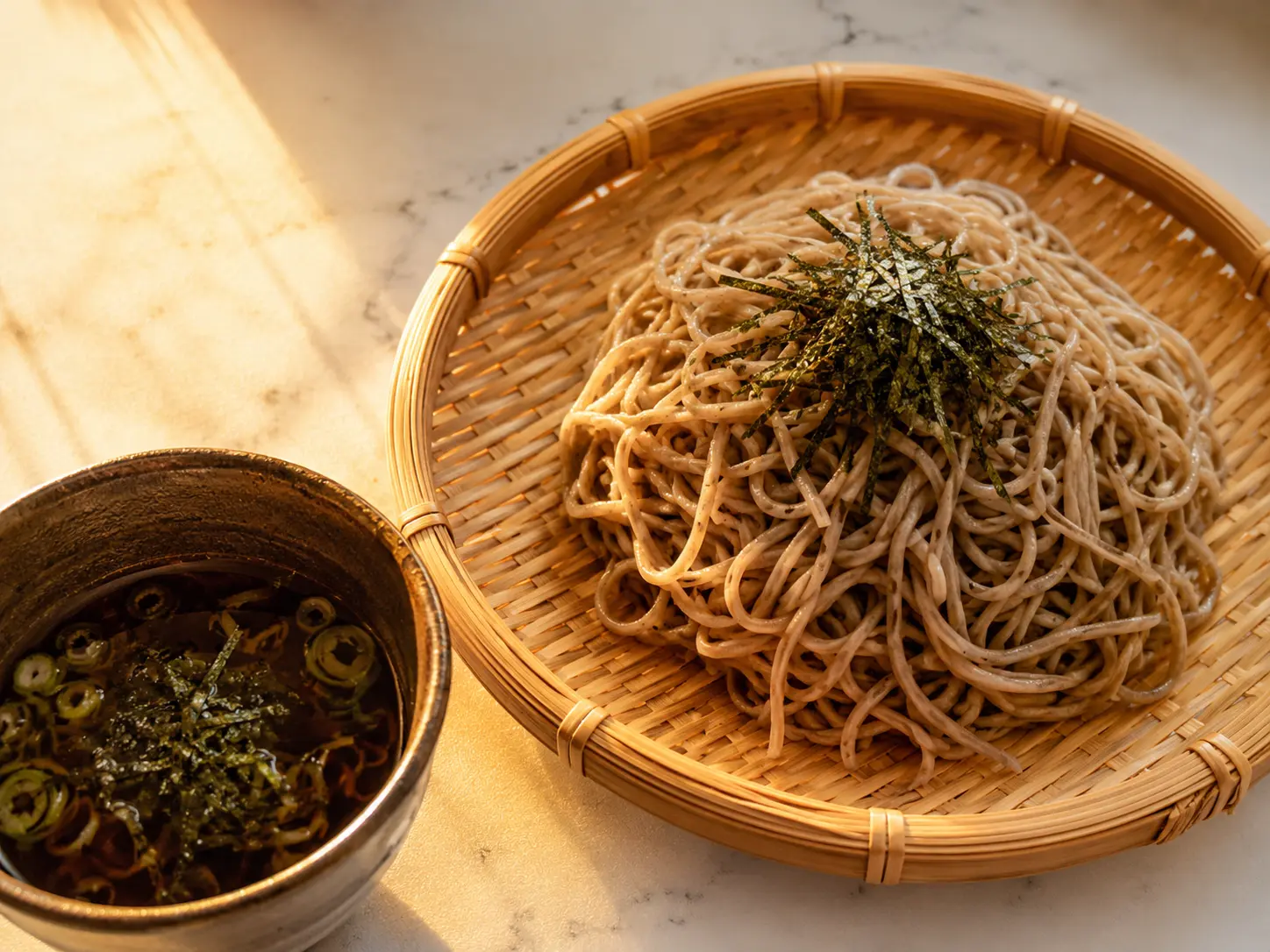
This dish is known in Japan as zaru soba (ざるそば) — literally “soba on a basket” — and it’s one of the most iconic warm-weather meals in Japanese cuisine. Buckwheat noodles are boiled, shocked in ice water to firm up their texture, then dipped bite by bite into a savory-sweet sauce called tsuyu or mentsuyu.
What makes this recipe special for busy weeknights:
- No cooking skill required, if you can boil water, you can make this
- Make-ahead friendly, the dipping sauce keeps in the fridge for up to two weeks
- Naturally lighter, soba noodles have fewer calories and more fiber than regular wheat pasta
- Endlessly customizable, dress it up with tempura, shredded chicken, or a soft-boiled egg
- A genuine weeknight winner, it comes together faster than delivery would even arrive
This isn’t a “soba noodle salad” with a heavy dressing tossed through it, it’s the traditional dipping-style preparation, which is what makes it so light and refreshing rather than heavy or overdressed.
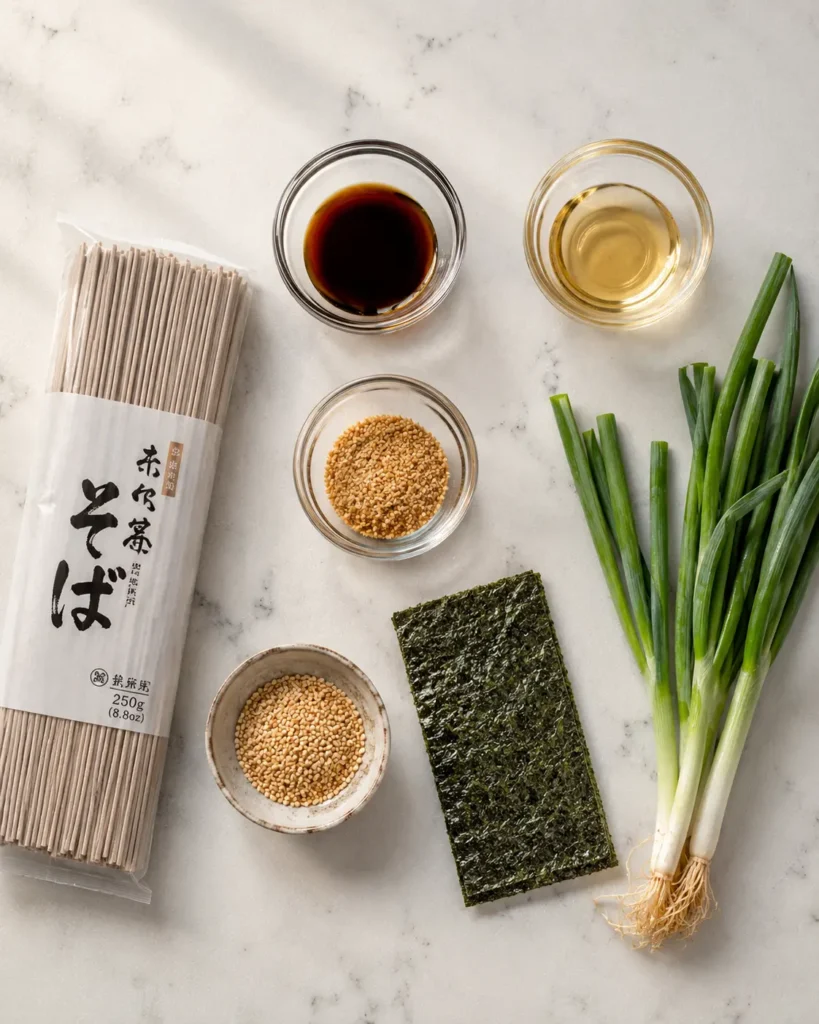
Ingredients for Cold Soba Noodles
For the Soba Noodles
- 2 bundles (about 14 oz / 400g total) dried soba noodles, (I use authentic organic Soba 100% buckwheat noodles, they hold up beautifully when chilled)
- Water, for boiling (no salt needed)
- Ice, for the ice bath
Dipping Sauce (Tsuyu)
- 1 cup dashi stock (or ½ tsp instant dashi powder dissolved in 1 cup water, this is what I use on weeknights)
- ¼ cup soy sauce
- ¼ cup mirin (find it in the asian foods aisle or order online; it’s the ingredient that gives tsuyu its signature sweet depth.)
- 1 tablespoon sugar (optional, adjust to taste)
- 1 tablespoon sake (optional, for depth of flavor)
For Garnish
- 2 scallions, thinly sliced
- 1 sheet nori (seaweed), cut into thin strips
- 1 tablespoon toasted sesame seeds
- Fresh grated wasabi or wasabi paste, to taste
- Grated daikon radish (optional, traditional garnish)
No dashi on hand? Substitute a low-sodium chicken stock, or use a 2:1 ratio of regular chicken stock to water. It won’t be 100% traditional, but it works beautifully in a pinch.
How to Make Cold Soba Noodles (Step by Step)
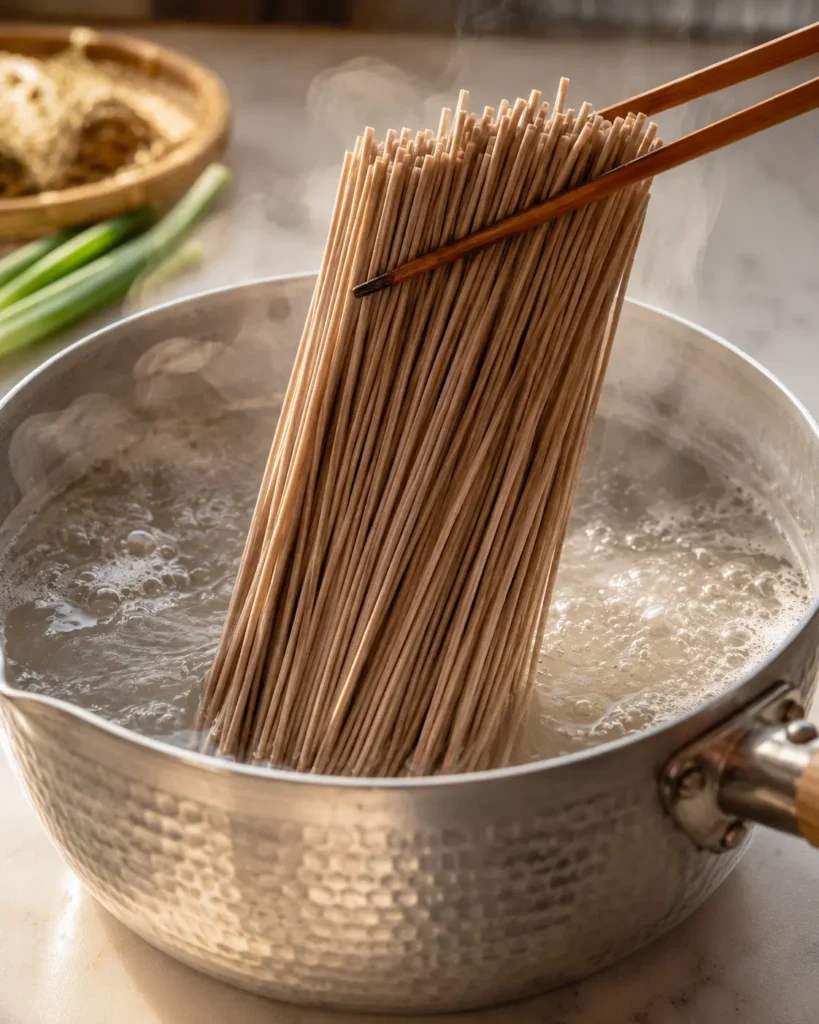
Step 1: Cook the Soba Noodles
- Bring a large pot of water to a rolling boil. Don’t salt the water, soba noodles are naturally seasoned.
- Add the soba noodle bundles, gently separating them with chopsticks or tongs as they soften.
- Cook for 3-5 minutes, stirring occasionally to prevent sticking (check your package directions, as timing varies slightly by brand).
- Test a strand about 30 seconds before the package time is up, it should be tender but still have a slight chew.
Step 2: Shock the Noodles in Ice Water
- Drain immediately in a fine-mesh strainer, soba noodles are thin enough to slip through a standard colander’s holes, and you need to move fast before they overcook from residual heat.
- Rinse thoroughly under cold running water, using your hands to gently rub the noodles, this removes excess starch and stops the cooking process.
- Transfer to a large mixing bowl filled with ice water, wide and deep is key, you need room for every strand to chill evenly and fast. This is the step that makes or breaks the texture.
- Swish them around for 20-30 seconds until fully chilled, then drain well.
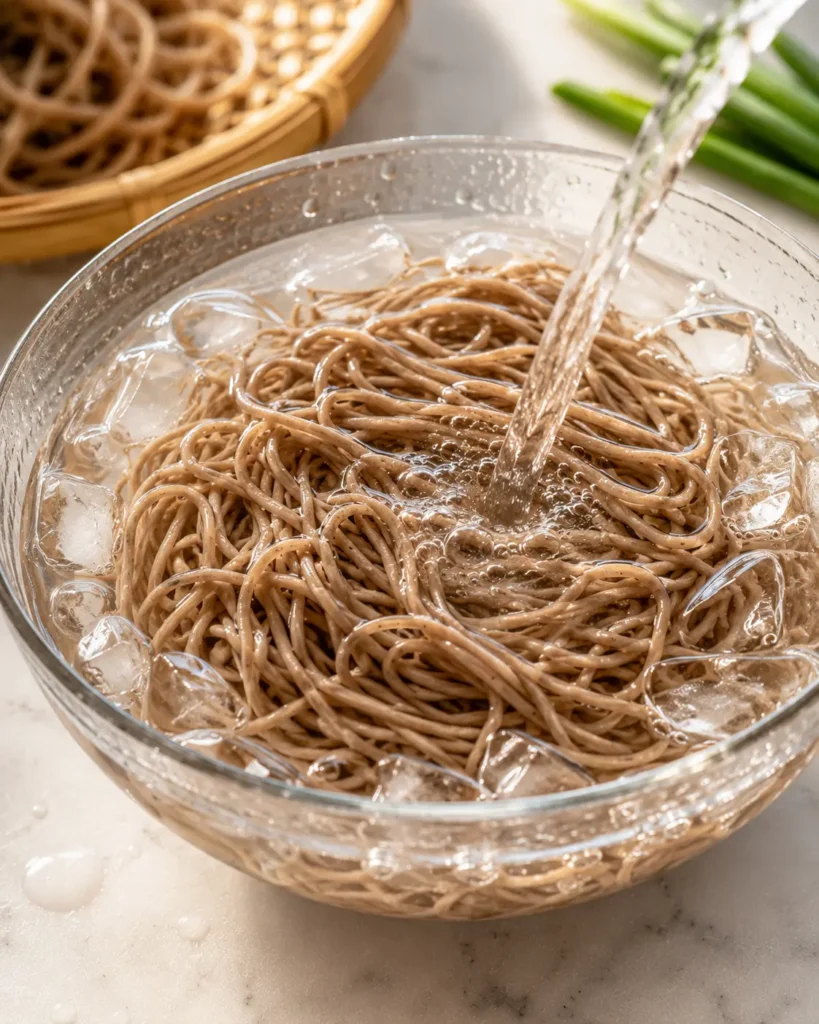
This step is the secret to authentic texture. Skipping the ice bath is the #1 reason homemade cold soba turns out mushy instead of springy and chewy.
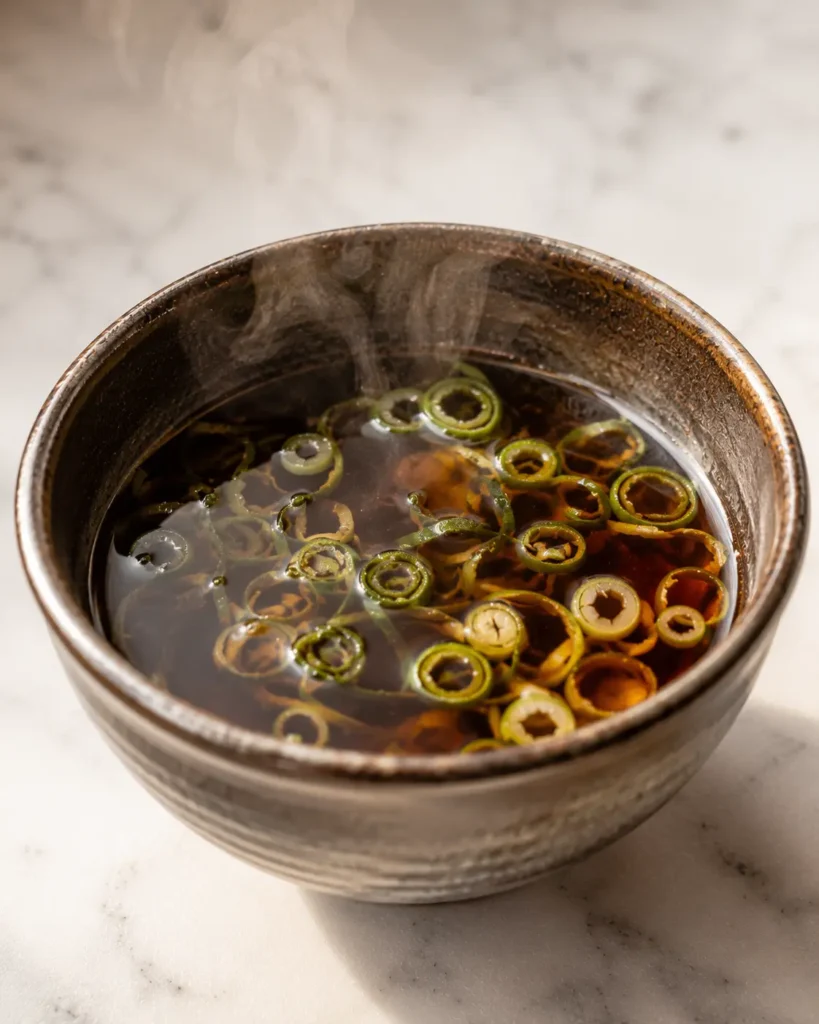
Step 3: Make the Dipping Sauce
- Combine the dashi stock, soy sauce, mirin, sugar, and sake (if using) in a small saucepan.
- Bring to a gentle simmer over medium heat, stirring until the sugar dissolves, about 2 minutes.
- Remove from heat and let cool to room temperature.
- Chill in the refrigerator for at least 15 minutes before serving (or make it ahead, it keeps for up to 2 weeks).
Step 4: Assemble and Serve
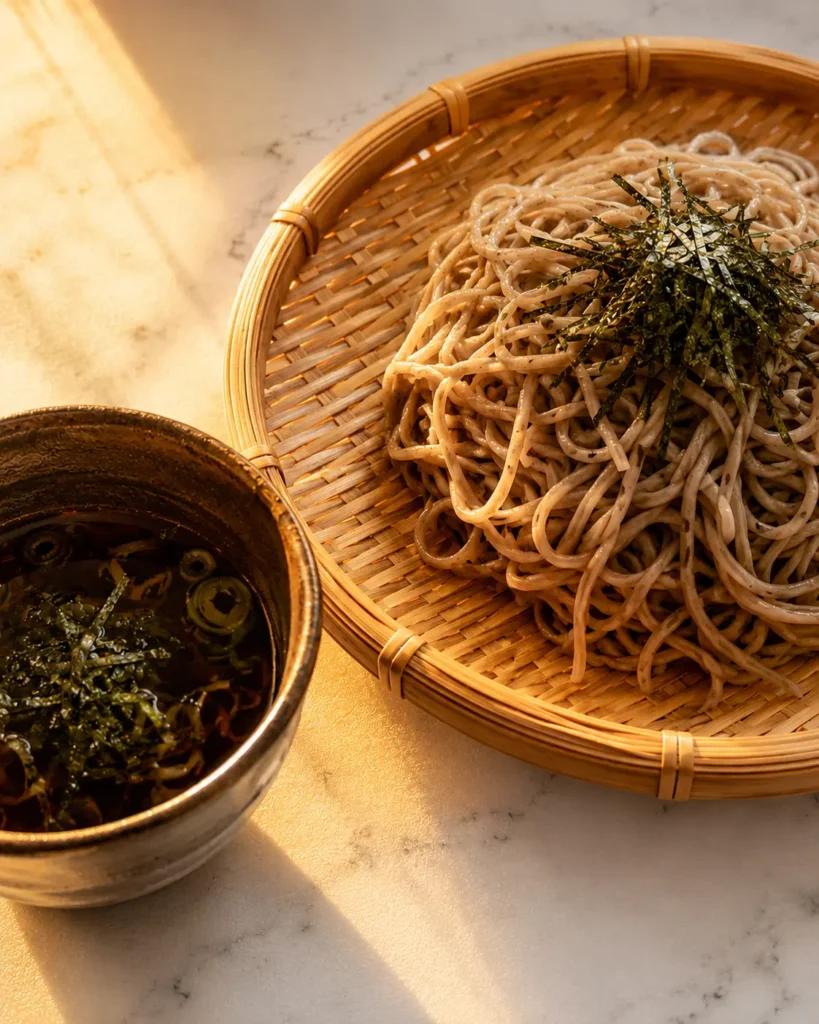
- Divide the chilled, drained noodles among serving plates or a bamboo zaru basket if you have one (they cost less than one restaurant order of zaru soba and make the presentation feel completely authentic).
- Pour the dipping sauce into small Japanese dipping bowls (traditionally called choko, they make the meal feel genuinely restaurant-quality)
- Top the noodles with scallions, nori strips, and sesame seeds.
- Serve with wasabi and grated daikon on the side, letting everyone customize their own dipping sauce.
- To eat: pick up a small bundle of noodles with chopsticks, dip into the sauce, and enjoy immediately.
Tips & Variations
Pro Tips for Perfect Texture
- Don’t overcook the noodles. Soba goes from perfectly chewy to mushy fast, start checking a minute before the package time.
- Rub, don’t just rinse. Gently rubbing the noodles under cold water removes surface starch that makes them gummy.
- Make the sauce ahead. Tsuyu actually tastes better after the flavors meld for a few hours, making this a genuine make-ahead meal for busy weeknights.
Dietary Modifications
- Gluten-free: Most soba noodles are only 80% buckwheat and 20% wheat flour, so they are not automatically gluten-free. Look for 100% buckwheat (“juwari soba”) noodles at Japanese grocery stores or specialty markets if you need a gluten-free version, and swap regular soy sauce for tamari.
- Vegan: Skip the bonito-based dashi and use a kombu-only (kelp) dashi or a vegetable stock instead.
- Low-sodium: Use low-sodium soy sauce and reduce the sauce’s soy sauce ratio slightly, adding a touch more mirin to balance.
Fun Variations to Try
- Protein boost: Add grilled chicken, seared tofu, tempura shrimp, or a soft-boiled egg
- Extra veggies: Toss in shredded cucumber, carrots, or edamame for crunch
- Spicy kick: Stir a small spoonful of chili oil or rayu into the dipping sauce
- Citrus twist: A squeeze of yuzu or lime brightens the sauce beautifully
Storage & Reheating Instructions
- Storing leftovers: Store cooked soba noodles and dipping sauce separately in airtight containers in the refrigerator for up to 2 days. The sauce alone keeps for up to 2 weeks.
- Reheating: Cold soba is meant to be eaten chilled, so there’s no reheating required! If the noodles have been in the fridge and seem a bit firm, simply rinse them briefly under warm water for a few seconds to loosen them up, then re-chill before serving.
- Freezing: We don’t recommend freezing cooked soba noodles, as the texture becomes unpleasantly mushy once thawed. The uncooked dried noodles, however, store indefinitely in your pantry.
FAQs About Cold Soba Noodles
What is the difference between udon vs soba noodles?
Udon noodles are thick, chewy, and made from wheat flour, giving them a mild flavor and soft bite. Soba noodles are thinner and made primarily from buckwheat flour, giving them a nuttier, earthier flavor and a firmer, slightly grainy texture. Soba is also generally lower in calories and higher in fiber than udon.
Are soba noodles gluten free?
Most store-bought soba noodles are a blend of about 80% buckwheat flour and 20% wheat flour, so they contain gluten. If you need a strictly gluten-free option, look specifically for packages labeled 100% buckwheat soba noodles or juwari soba, these are the ones I recommend for anyone with gluten sensitivity.
Can I make the soba dipping sauce ahead of time?
Yes! In fact, we recommend it. The tsuyu dipping sauce actually improves in flavor after resting in the fridge for a few hours, and it will keep well for up to two weeks in a sealed container, making it perfect for meal prep.
How do I keep cold soba noodles from sticking together?
The key is the ice bath rinse. After draining the noodles, rub them gently under cold running water to remove excess starch, then chill them in ice water. If they’re being stored, a light drizzle of sesame oil tossed through can help keep them separated.
What can I serve with cold soba noodles?
Cold soba pairs beautifully with grilled proteins like teriyaki chicken or salmon, a simple cucumber sunomono salad, or tempura vegetables. It also works well as a light lunch on its own.
Is this recipe kid-friendly?
Absolutely, it’s a family-approved favorite in our house. For picky eaters, serve the sauce on the side so kids can dip as little or as much as they like, and skip the wasabi.
Can I use instant dashi powder instead of homemade dashi?
Yes, instant dashi powder is a fantastic time-saver and works perfectly in this recipe. Simply dissolve about ½ teaspoon of dashi powder per cup of water according to the package instructions.
More Easy Japanese Recipes
- Japanese Dragon Sushi Rolls
- Healthy Japanese Mounjaro Recipe
- Miso Soup Recipe (味噌汁)
- Matcha Crinkle Cookies
- Easy Chocolate Buns
Disclosure: Global Food Eats is a participant in the Amazon Services LLC Associates Program, an affiliate advertising program designed to provide a means for sites to earn advertising fees by advertising and linking to Amazon.com.
Shop This Recipe


Cold Soba Noodles Recipe (Authentic 15-Minute Zaru Soba)
Ingredients
Method
- Bring a large pot of water to a boil. Add soba noodles and cook 3-5 minutes until tender with a slight chew.
- Drain and rinse noodles under cold water, rubbing gently, then chill in an ice bath until fully cold.
- Simmer dashi, soy sauce, mirin, sugar, and sake until sugar dissolves. Cool and chill before serving.
- Plate chilled noodles, top with scallions, nori, and sesame seeds, and serve with dipping sauce, wasabi, and daikon.