
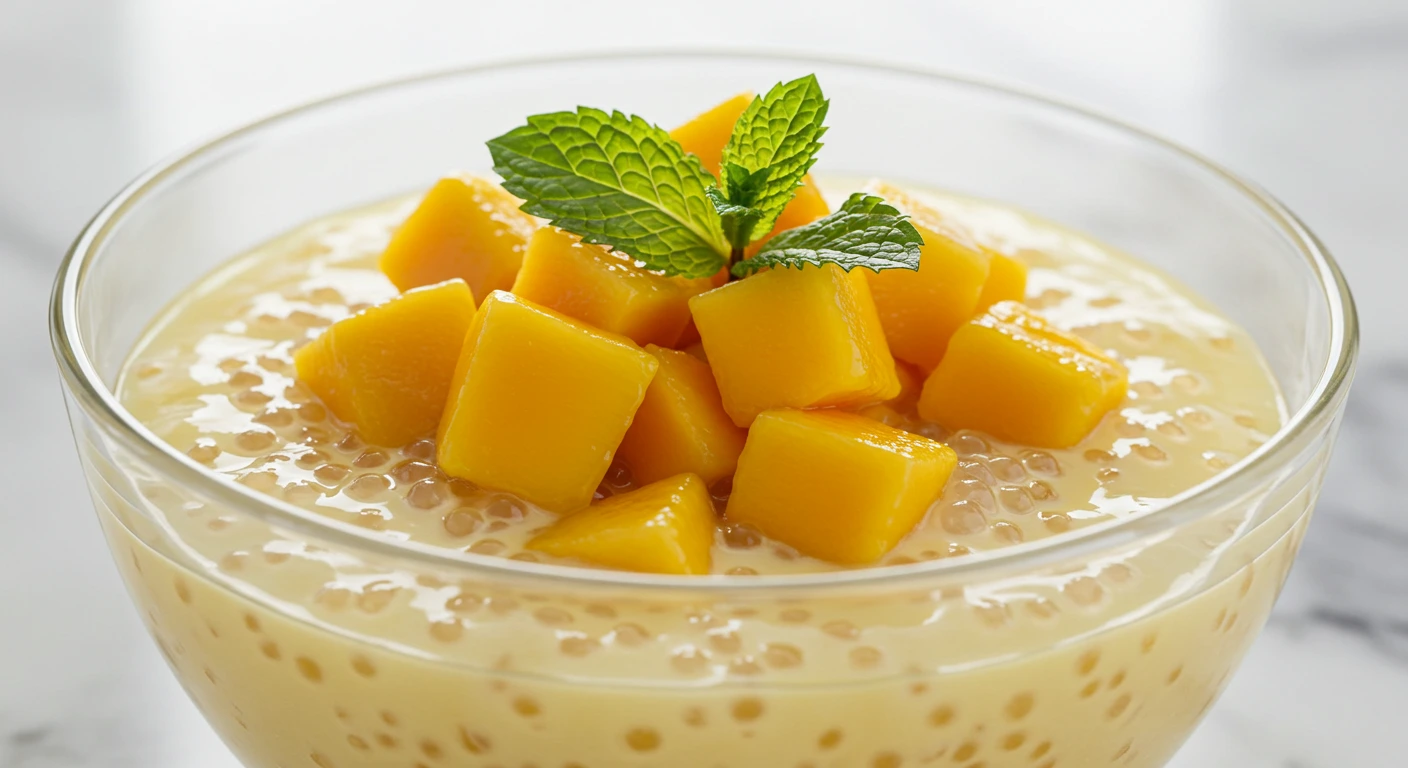
Mango Sago Recipe
Make this easy Mango Sago Recipe in 15 minutes! Discover the secrets to Hong Kong’s favorite Cantonese dessert with simple ingredients.
Published: Oct 15, 2025 | By Ilyas Siaghy
The first time I tasted a Mango Sago Recipe, it was at a small dessert shop on a warm afternoon. One spoonful of the creamy mango mixture, soft chewy sago pearls, and sweet chunks of fresh mango was all it took for me to understand why this dessert is so loved across Asia. It was refreshing, fruity, and surprisingly light, the perfect treat for a hot day.
After that, I couldn’t wait to recreate it at home. What I discovered is that a good Mango Sago Recipe is not only delicious but also incredibly easy to make. With ripe mangoes, cooked sago pearls, and a few simple ingredients, you can create a dessert that feels restaurant-worthy without requiring any complicated techniques. The combination of silky mango puree, juicy fruit, and delicate tapioca pearls creates a texture that’s both creamy and satisfying.
One of the things I love most about this dessert is how refreshing it feels compared to heavier sweets. It’s naturally vibrant, bursting with tropical flavor, and perfect for serving after a meal or at summer gatherings. Plus, it’s a wonderful way to make the most of sweet, ripe mangoes when they’re in season.
If you’re looking for the best Mango Sago Recipe, you’ve come to the right place. This easy homemade dessert is creamy, refreshing, and packed with fresh mango flavor. Once you try it, you’ll see why Mango Sago has become a favorite dessert enjoyed around the world.
Ingredients for Mango Sago Recipe
Main Ingredients
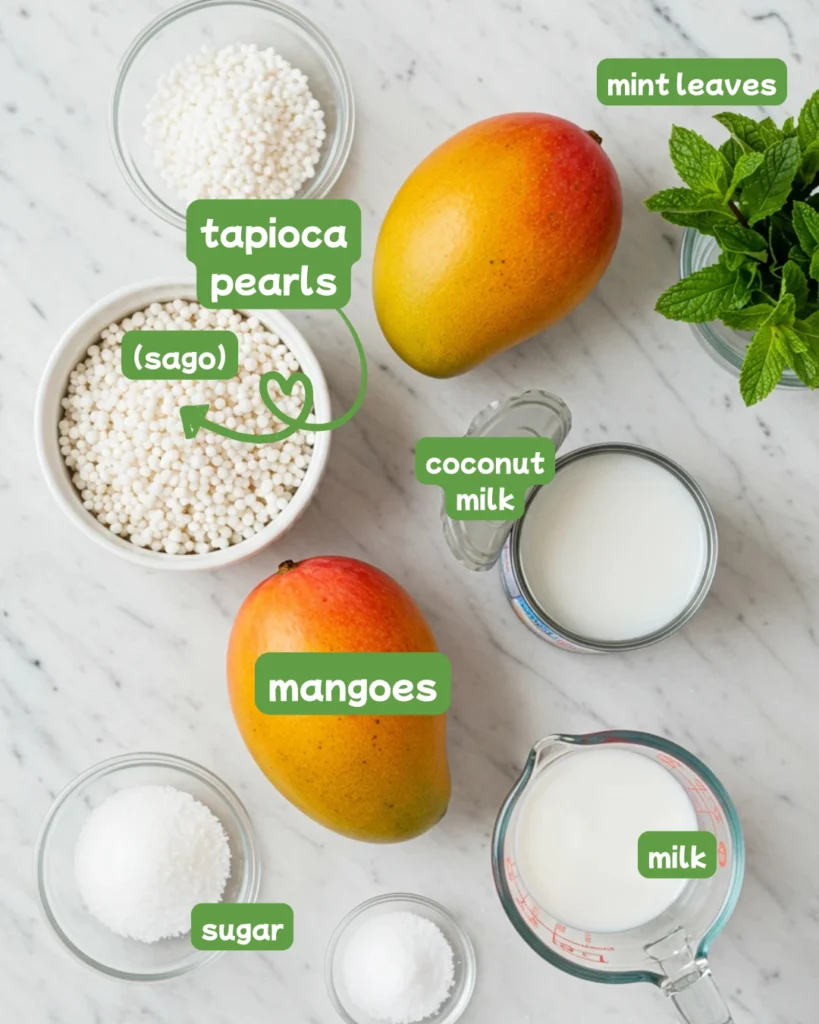
- 1 cup small tapioca pearls (sago)
- 2 large ripe mangoes (about 3 cups diced)
- 1 can (13.5 oz) coconut milk
Optional But Recommended
- 2-4 tablespoons sugar or condensed milk
- 1/2 cup coconut water or milk
- Fresh mint leaves
Ingredient Sourcing Tips
- Finding sago pearls: Check the Asian food aisle of your regular grocery store, or visit any Asian supermarket. They’re sold as “tapioca pearls,” “sago,” or “pearl tapioca.” Make sure you’re getting the small pearls (about 2-3mm), not the large bubble tea pearls.
- Choosing the perfect mangoes: Ripe mangoes should give slightly when gently pressed and smell sweet near the stem. If your mangoes are firm, leave them on the counter for 2-3 days. For this mango sago recipe, riper is definitely better you want maximum sweetness and minimal stringiness.
- Coconut milk matters: I prefer full-fat coconut milk from a can (not the carton variety sold as a milk alternative). Brands like Chaokoh or Aroy-D give excellent results. Shake the can before opening to mix the cream and liquid.
How to Make Mango Sago Recipe (Step by Step)
Step 1: Cook the Sago Pearls
- Fill a medium pot with 4 cups of water and bring to a rolling boil over high heat. Once boiling, add your 1 cup of sago pearls while stirring gently to prevent clumping. Reduce heat to medium and let them cook for 10-12 minutes, stirring occasionally.
- You’ll know they’re done when the pearls turn from opaque white to almost completely translucent with just a tiny white dot in the center. They should be chewy but not crunchy. If you see lots of white still visible after 12 minutes, cook for another 2-3 minutes.
- Turn off the heat, cover the pot, and let the sago sit for 5 minutes to finish cooking in the residual heat. This resting period ensures perfectly tender pearls throughout.
Step 2: Rinse and Chill the Sago
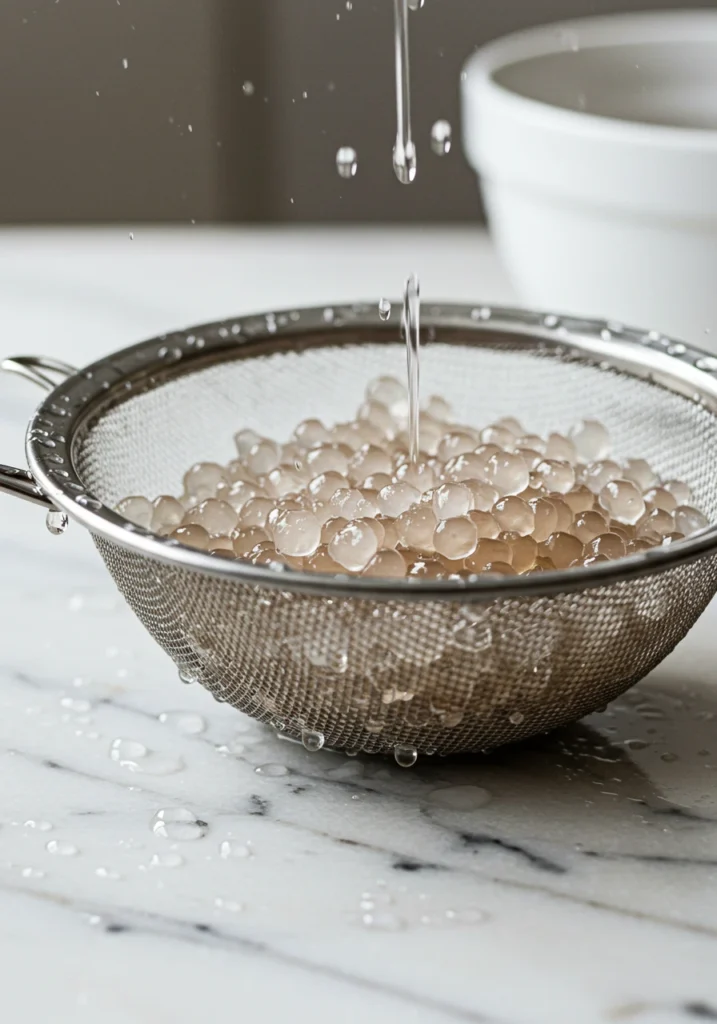
- Drain the cooked sago in a fine-mesh strainer and immediately rinse under cold running water for about 1 minute. This stops the cooking process and rinses away excess starch that can make your dessert gummy.
- Transfer the rinsed sago to a bowl and refrigerate while you prepare the other components. Cold sago is essential for that refreshing quality we’re after.

Step 3: Prepare the Mangoes
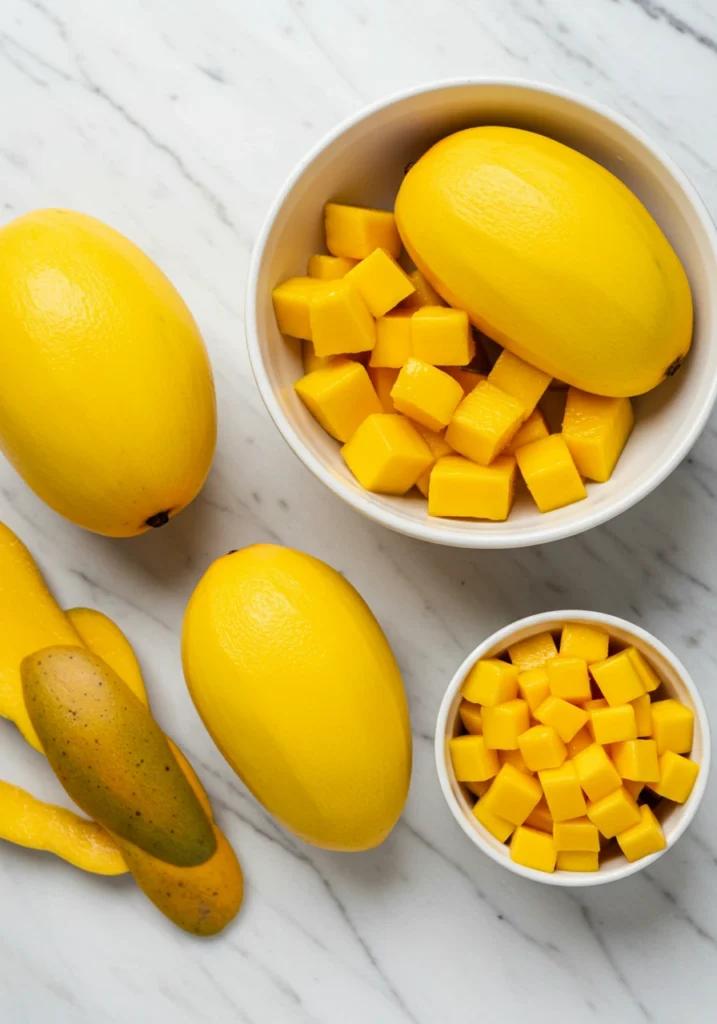
- Peel your mangoes and cut the flesh away from the pit. You’ll need about 3 cups of mango chunks total.
- Take 2 cups of the mango and add them to a blender with 1 cup of coconut milk. Blend until completely smooth and creamy, this creates the luscious base of your mango sago. Taste and add 2-4 tablespoons of sugar if needed (this depends entirely on how sweet your mangoes are).
Pro tip: If your mango puree seems too thick, add a splash of coconut water to reach a pourable consistency. You want it creamy but not pudding-thick.
3. Dice the remaining 1 cup of mango into bite-sized cubes. These will be your topping and add wonderful texture contrast.
Step 4: Assemble Your Coconut Sago
- In a large bowl or pitcher, combine your chilled sago pearls with the mango-coconut puree. Stir well to distribute the pearls evenly. If you want extra coconut flavor, stir in the remaining coconut milk at this stage (you can also serve it on the side and let people add their own).
- Taste and adjust sweetness if needed. Remember, the dessert will taste less sweet when it’s fully chilled, so err on the slightly sweeter side.
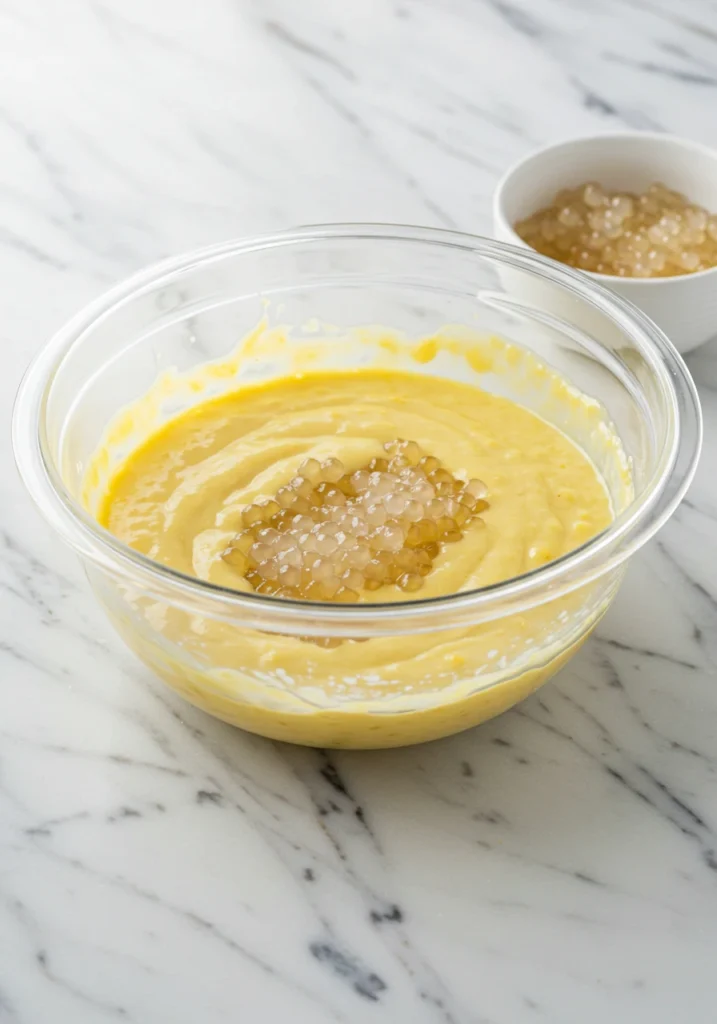
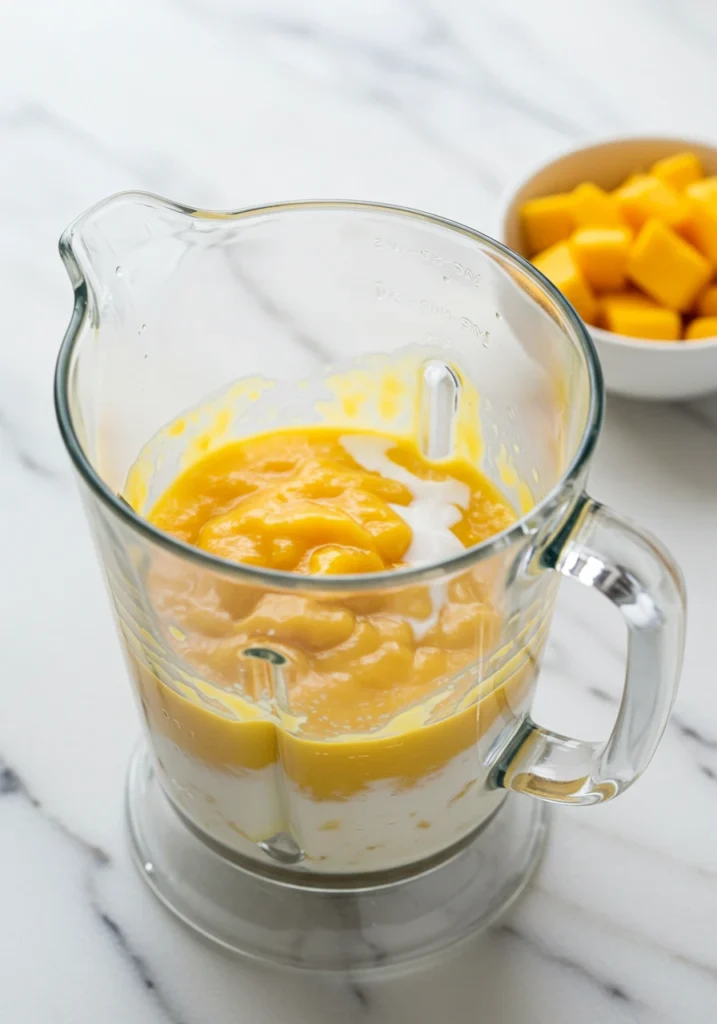
Step 5: Chill and Serve
- Cover and refrigerate your mango sago for at least 2 hours, or up to 24 hours. The longer it chills, the more the flavors meld together. This is actually the perfect make-ahead dessert for parties!
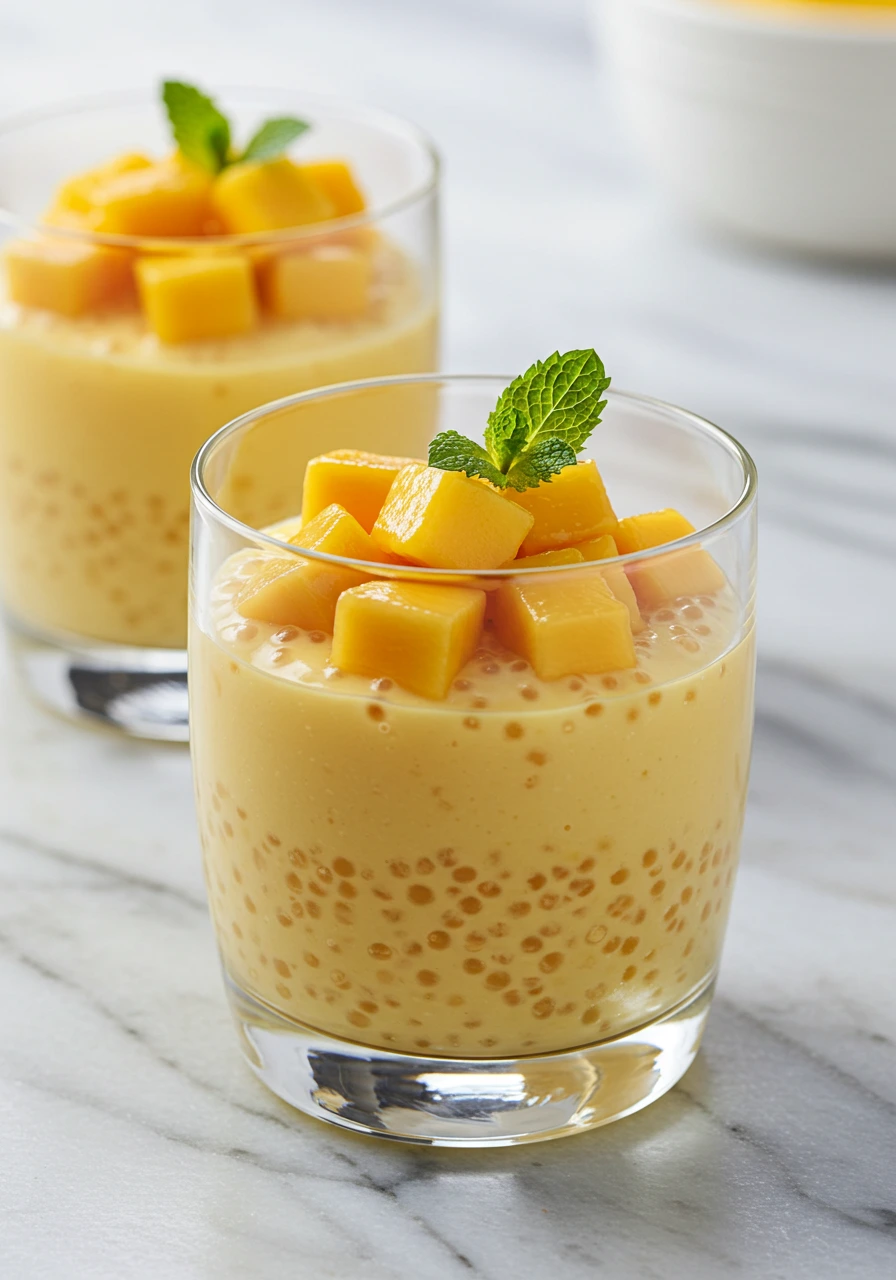
- When ready to serve, divide the mango sago mixture into bowls or glasses. Top each serving with fresh mango cubes and garnish with mint leaves if using.

Tips for the Best Mango Sago Recipe
Cooking Perfect Sago Every Time
Rinsing your sago is a small step that makes a big difference. Those tiny pearls release a lot of starch while cooking, and a quick rinse keeps your mango sago clear and creamy instead of thick and gluey. Always cook sago in plenty of water so the pearls can move freely, crowding them is the fastest way to end up with clumps. Keep an eye on the clock and start checking around the 10-minute mark for that perfect chewy center. Once cooked, let the sago cool completely so your dessert stays light, chilled, and refreshing.
Choosing and Prepping the Best Mangoes
The mango you use really sets the tone for this mango sago recipe. Ataulfo mangoes are a favorite for their natural sweetness and smooth, fiber-free flesh, but regular supermarket mangoes work just fine too. For the silkiest texture, blend your mango until completely smooth, and don’t hesitate to strain it if needed. If fresh mangoes aren’t in season, thawed frozen mango is a great backup and often just as flavorful, making this dessert easy to enjoy year-round.
Coconut Milk Tips for a Creamy Finish
When it comes to coconut milk, full-fat delivers the richest and creamiest result. Light versions will work, but the dessert won’t have that classic luxurious feel. Always stir or shake the can before measuring, since coconut milk naturally separates. The beauty of homemade mango sago is adjusting it to your taste, start with equal parts mango puree and coconut milk, then tweak from there. More coconut milk gives you extra creaminess, while more mango brings bold tropical flavor.
Variations and Customizations
Pomelo Mango Sago
Add 1 cup of fresh pomelo segments to your dessert for the traditional Hong Kong version. The pomelo’s slight bitterness and citrus notes create an incredible flavor complexity. Can’t find pomelo? Grapefruit segments work in a pinch, though they’re more tart.
Mixed Fruit Sago
Turn this into a tropical fruit explosion by adding diced papaya, dragon fruit, or kiwi alongside the mango. Keep the mango as your base puree, but top with a rainbow of fruits.
Condensed Milk Version
For an extra-indulgent treat, drizzle 1-2 tablespoons of sweetened condensed milk over each serving. This is popular in Vietnamese versions and adds a caramel-like richness.
Vegan Sweetened Version
If you’re avoiding refined sugar, use maple syrup or agave nectar to sweeten instead. Start with 2 tablespoons and adjust to taste.
Coconut Cream Topper
Make it fancy by whipping the thick cream from a chilled can of coconut milk and dolloping it on top like whipped cream. So elegant, so delicious!
Low-Sugar Option
Let the natural mango sweetness shine by skipping added sugar entirely. Choose the ripest, sweetest mangoes you can find, and you won’t miss it.
Storage and Make-Ahead Instructions
How to Store Mango Sago in the Refrigerator
Mango sago stores beautifully in the fridge, making it a great make-ahead dessert. Keep it in an airtight container and it will stay fresh for up to 3 days. In fact, the flavors blend even better by the next day, giving you a creamier, more balanced taste. Just give it a gentle stir before serving to bring everything back together.
Smart Storage Tips for the Best Texture
If you’re prepping mango sago several hours in advance, store the fresh mango chunks separately from the sago mixture. This keeps the mango bright, juicy, and fresh instead of soft and dull. Since sago pearls continue to soak up liquid as they sit, the mixture may thicken over time. A splash of coconut milk or coconut water will quickly loosen it back to your preferred consistency.
Can You Freeze Mango Sago?
Freezing mango sago isn’t recommended if texture matters to you. Tapioca pearls don’t handle freezing well, they turn hard in the freezer and gummy once thawed. The flavor may still be fine, but the creamy, chewy texture that makes this dessert special is lost. For best results, enjoy mango sago fresh or chilled from the fridge.
Prep-Ahead Options That Actually Work
You can still get a head start without freezing the finished dessert. Cook and rinse the sago pearls, then store them in the fridge with a little water for up to 2 days. Mango puree can also be made ahead and refrigerated for up to 3 days. When you’re ready, simply combine everything for a fresh-tasting dessert.
Party Planning and Make-Ahead Tips
Mango sago is perfect for entertaining because most of the work can be done early. Prepare the coconut sago base the night before or the morning of your event and keep it well chilled. Portion it into serving glasses shortly before guests arrive, then top with fresh mango right before serving. It looks beautiful, tastes fresh, and keeps hosting stress-free.
How to Serve Mango Sago Recipe
Mango sago is best served well chilled, which helps highlight its creamy texture and bright tropical flavor. Spoon it into small bowls, dessert cups, or clear glasses so the layers and mango color really stand out. For extra freshness, top each serving with diced ripe mango just before serving. A light drizzle of coconut milk on top adds a smooth finish and makes the dessert look more inviting. If you like contrast, a sprinkle of toasted coconut or a few sago pearls on top works beautifully. Serve mango sago as a light dessert after spicy meals or as a refreshing afternoon treat. Keep portions modest, as this creamy dessert is rich but very satisfying.
Pairings and Menu Recipe Ideas
Mango Sago Recipe FAQs
What’s the difference between sago and tapioca?
Great question! Technically, true sago comes from the sago palm tree, while tapioca comes from cassava root. However, in modern cooking and especially in Asian desserts, the terms are used interchangeably. What you’ll find labeled as “sago” in stores is almost always tapioca pearls. They work exactly the same way in this mango sago recipe, so don’t stress about finding “authentic” sago.
Can I use large boba pearls instead of small sago?
You can, but your dessert will have a very different texture and appearance. Large boba pearls (the kind used in bubble tea) are chewier and more dramatic, while small sago pearls are delicate and blend more seamlessly with the coconut milk. If you use large boba, follow the package cooking instructions (usually 5 minutes boiling, then 5 minutes resting covered), and note they’ll take up more visual space in your dessert.
Why is my mango sago watery?
This usually happens when your sago pearls weren’t drained well after cooking, or if your mango puree was too thin. Make sure to thoroughly drain the cooked sago and give it a good rinse. If your mixture is already watery, you can fix it by adding more coconut milk or mango puree to thicken it up. Remember that the mixture should be creamy and coat the back of a spoon.
How ripe should my mangoes be?
Very ripe! You want mangoes that are fragrant, give slightly when pressed, and are deeply colored (golden yellow for Ataulfo varieties). Slightly soft to the touch is perfect. Rock-hard mangoes won’t blend as smoothly and will require more added sugar. If you only have firm mangoes, speed up ripening by placing them in a paper bag with a banana or apple for 1-2 days.
Is mango sago healthy?
In moderation, absolutely! This dessert provides vitamin C and vitamin A from the mangoes, and healthy fats from the coconut milk. The tapioca pearls offer quick energy in the form of carbohydrates. While it does contain natural sugars from the fruit and any added sweetener, it’s far less processed than most desserts. Plus, it’s dairy-free and can be made with no refined sugar if you skip the added sweetener. A typical serving has around 200-250 calories, making it a reasonable treat.
Can I make this without a blender?
Yes, though it won’t be quite as smooth. Mash your mango chunks with a fork or potato masher until they’re as smooth as possible, then mix with the coconut milk. You’ll have a chunkier texture, which honestly is still delicious, just different from the classic silky version. Some people actually prefer it this way!
What can I substitute for coconut milk?
If you’re not a coconut fan (or have an allergy), try evaporated milk, almond milk, or oat milk. Fair warning: these won’t give you the traditional flavor profile, but they’ll still create a creamy base for the mangoes and sago. For the most authentic coconut flavor without dairy, there’s really no substitute for actual coconut milk.
More Easy Global Dessert Recipes
3-Ingredient Mango Sago Recipe
Ingredients
Method
- Fill a medium pot with 4 cups of water and bring to a rolling boil over high heat. Add 1 cup of sago pearls while stirring gently to prevent clumping. Reduce heat to medium and cook for 10-12 minutes, stirring occasionally. The pearls are done when they turn from opaque white to almost completely translucent with just a tiny white dot in the center. Turn off heat, cover the pot, and let sit for 5 minutes.
- Drain the cooked sago in a fine-mesh strainer and immediately rinse under cold running water for about 1 minute. This stops the cooking process and rinses away excess starch. Transfer the rinsed sago to a bowl and refrigerate while preparing other components.
- Peel mangoes and cut the flesh away from the pit to get about 3 cups of mango chunks. Add 2 cups of mango to a blender with 1 cup of coconut milk. Blend until completely smooth and creamy. Taste and add 2-4 tablespoons of sugar if needed. Dice the remaining 1 cup of mango into bite-sized cubes for topping.
- In a large bowl or pitcher, combine chilled sago pearls with the mango-coconut puree. Stir well to distribute the pearls evenly. If desired, stir in remaining coconut milk for extra creaminess. Taste and adjust sweetness if needed
- Cover and refrigerate mango sago for at least 2 hours, or up to 24 hours. When ready to serve, divide mixture into bowls or glasses. Top each serving with fresh mango cubes and garnish with mint leaves if using. Serve chilled.




One Comment